


Introduction
Plastic food containers have brought great convenience to modern life, but they have also quietly increased the environmental burden. Many consumers and catering businesses often believe that as long as the container is labeled "recyclable," it is equivalent to being environmentally friendly. But is this really the case? This article will delve into the current state of plastic food container recycling and provide sustainable solutions.

The Reality of Plastic Food Container Recycling
Plastic food containers offer convenience but face recycling challenges. Understanding these issues helps businesses and consumers make more environmentally responsible choices.
Recycling Difficulty Varies by Plastic Type
Common materials for plastic food containers include PET (polyethylene terephthalate), PP (polypropylene), and PS (polystyrene). Different plastics have varying recycling value and technical requirements, and some types may not be accepted by local recycling systems. As a result, not all plastic containers can be effectively recycled.
01
Food Residue Affects Recycling Efficiency
Oil and food residue on containers can contaminate recycling materials, making them difficult to process. Even if a container is labeled "recyclable," if it is not properly cleaned, it may fail to enter the recycling stream and ultimately be sent to landfill or incineration.
02
Recycling Symbols Do Not Guarantee Actual Recycling
Many containers carry recycling symbols, but this does not ensure they will actually be recycled. Actual recycling rates are influenced by local facilities, policies, and consumer behavior, which means a portion of "recyclable" plastics never enters the recycling system.
03
Overall Recycling Rates Remain Low
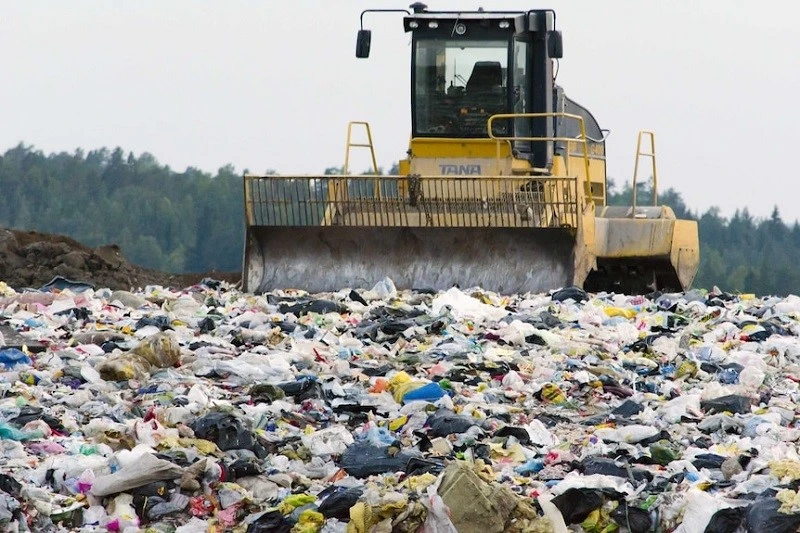
Globally, the actual recycling rate of plastic food containers is still limited. A large amount of single-use plastic continues to exert pressure on the environment, highlighting the urgent need for sustainable alternatives and improved recycling efficiency.
04
Sustainable Solutions for Takeout Packaging
To address the challenges of plastic food container recycling, businesses and manufacturers are exploring eco-friendly packaging solutions to promote sustainability in the takeout industry:
1. Choose Truly Recyclable Materials
Using plastics that meet recycling standards, such as PET or high-quality PP, ensures that containers can be efficiently processed and remanufactured, reducing waste caused by unsuitable materials.
2. Adopt Biodegradable or Bio-Based Materials
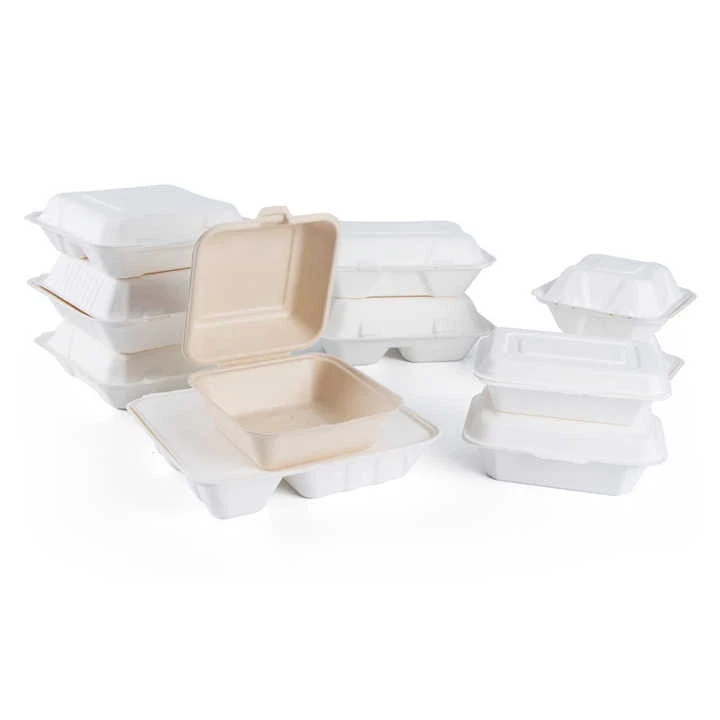
Biodegradable plastics and bio-based materials, such as PLA, can naturally break down under proper conditions, providing an environmentally friendly alternative for single-use takeout packaging while still meeting practical usage needs.
3. Optimize Design for Recyclability
By reducing the use of mixed materials, standardizing container materials, and simplifying structural design, plastic containers become easier to recycle, improving recycling efficiency and reducing resource waste.
Plastic Food Container Recycling Tips for Businesses and Consumers
To improve the recycling efficiency of plastic food containers, businesses and consumers can take the following practical actions:
1. Sort Containers Correctly
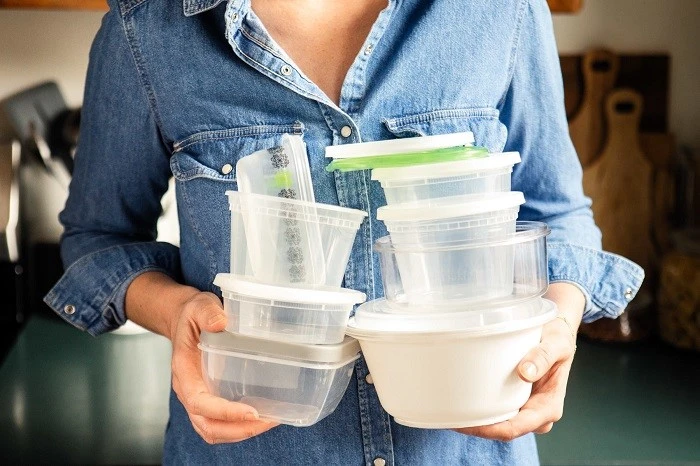
Consumers should follow local recycling rules when disposing of plastic containers to avoid mixing them with non-recyclable waste. Businesses can provide clear sorting instructions on takeout packaging to help customers dispose of containers properly.
2. Clean Containers Before Recycling
Consumers and food service providers should try to remove food residue and grease from used plastic containers, as clean containers are more likely to be accepted by recycling facilities, improving the actual recycling rate.
3. Understand Local Recycling Policies and Facilities
Businesses and consumers should familiarize themselves with the types of plastics accepted and the processing requirements in their area to prevent non-recyclable containers from entering the recycling stream.
4. Promote Recycling Awareness
Businesses can educate consumers about the importance and methods of recycling plastic food containers through advertising, social media, or in-store signage. This can raise public awareness and help cultivate good recycling habits.
Conclusion
In summary, not all plastic food containers labeled as "recyclable" can actually be recycled. Factors such as material type, design, and local recycling conditions all affect recycling effectiveness. Therefore, achieving truly eco-friendly takeout packaging requires careful selection and proper handling.
YANGRUI: Making Takeout Packaging More Eco-Friendly
As a professional manufacturer of plastic food containers, YANGRUI offers biodegradable takeout containers made from renewable materials such as plant fibers, kraft paper, and cornstarch. Partner with us to access customized solutions and contribute to a greener takeout packaging future. Contact us today!