


Bagasse and other molded-fiber containers are commonly available for hot-food applications, while clear PLA packaging is often intended for colder uses. Paper and kraft containers can be harder to judge because the visible fiber may be combined with a coating, adhesive, window, or separate lid.
If you need a quick rule, use this order: check the product instructions first, check the base and lid separately, identify the material, then consider the food and heating conditions. If you still cannot verify that a disposable container is microwave-safe, transfer the food to a microwave-safe glass or ceramic dish.
For a broader comparison of materials used for reheating, see this guide to microwave-safe food container materials.
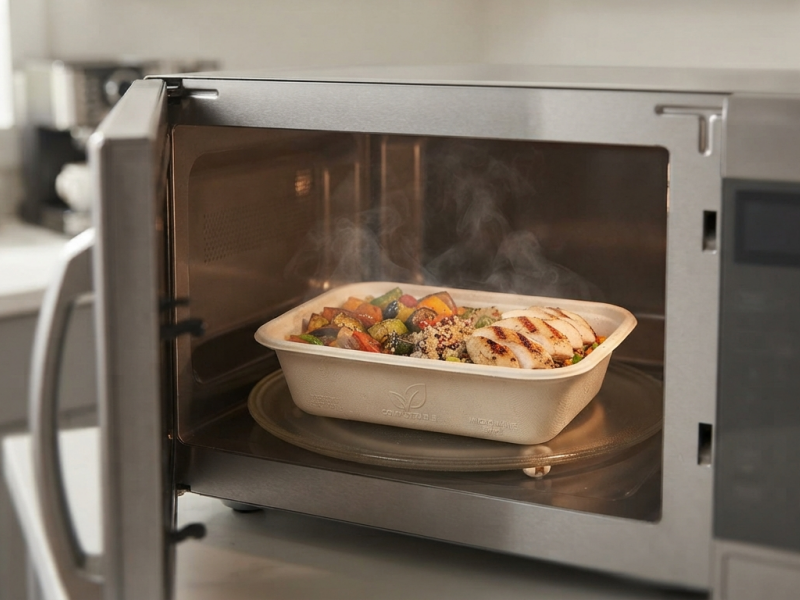
Compostable, Heat-Resistant, and Microwave-Safe Are Not the Same Thing
These three descriptions answer different questions, and confusing them is one of the main reasons people make incorrect assumptions about disposable food packaging.
| Term | What It Tells You | What It Does Not Tell You |
|---|---|---|
| Compostable | The product is designed to break down under specified composting conditions when it meets the applicable requirements. | Whether the product can be microwaved. |
| Heat-resistant | The material or product can tolerate certain elevated temperatures under defined conditions. | Whether the complete food-contact package was designed for microwave reheating. |
| Microwave-safe | The product is intended for microwave use under the conditions specified by its manufacturer. | Whether it is compostable, recyclable, oven-safe, or suitable for unlimited heating. |
This distinction matters because compostability standards address end-of-life performance rather than microwave performance. The current ASTM D6400 specification, for example, covers labeling of plastics designed to compost under aerobic municipal or industrial composting conditions. It does not function as a microwave-safety certification.
If you are still comparing the terminology used on environmentally oriented packaging, this overview of biodegradable takeaway containers provides useful background. YangruiPak's broader biodegradable food container range also shows why several different structures can sit under a similar sustainability category.
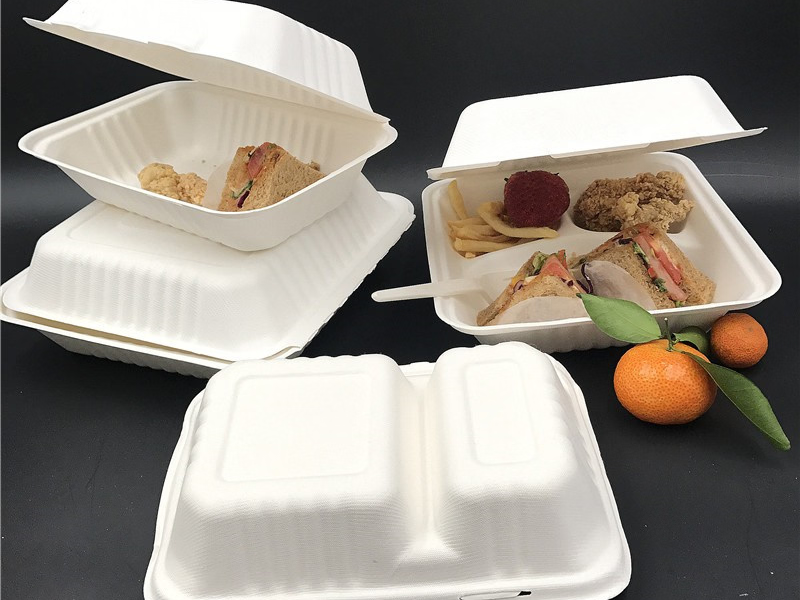
A Better Way to Decide: Product, Component, Material, and Food
Instead of asking only, "What material is this container?", use four checks in order.
1. Check the Exact Product
Look for microwave-use information on the container bottom, packaging sleeve, carton, product specification, or supplier page. Product-specific instructions should take priority over a general rule about bagasse, PLA, paper, or another material.
This is important because two containers that look similar can have different thicknesses, coatings, forming processes, lids, or intended uses.
2. Check Every Component
A food package is often a system rather than one material. A molded-fiber bowl may be paired with a clear plastic or bioplastic lid. A kraft box may contain a coating or window film. A clamshell may be one-piece fiber, while another package may combine several separate components.
Do not extend a microwave-safe claim for the base to the lid unless the lid is covered by the same instruction.
3. Identify the Material and Construction
Material gives useful context after you have checked the product specification. Common compostable food-packaging materials include molded plant fiber such as bagasse, PLA-based components, starch-based formulations, and coated paperboard.
Material identification is especially useful when comparing disposable packaging for different applications, but it should not be treated as a substitute for an actual microwave-use statement.
4. Consider What Food Is Being Heated
The container is only part of the heating system. The food matters too.
The FDA explains that containers used in microwave cooking can become hot because of heat transferred from the food, even though the container itself is not being heated in the same way as the food. The agency also notes that some plastic containers can melt from the heat of the food inside. See the FDA's guidance on microwave ovens and suitable containers.
More detailed FDA food-contact guidance explains that the temperature experienced by packaging during microwave cooking depends on factors including food composition, heating time, food mass and shape, and container shape. This is why a universal rule such as "all containers made from material X are safe for five minutes" is unreliable. The relevant technical discussion appears in the FDA's food-contact substance chemistry recommendations.
Which Compostable Containers Can Go in the Microwave?
| Container Type | General Guidance | Main Question to Check |
|---|---|---|
| Bagasse / molded fiber | Microwave-rated products are widely available for hot-food service. | Is the exact base and lid combination approved for microwave reheating? |
| Standard PLA packaging | Do not assume it is suitable for reheating. | Does the specific product explicitly state microwave use? |
| CPLA products | Use depends on the specific formulation and product design. | What heating conditions does the supplier specify? |
| Paper / kraft containers | Suitability varies with construction. | Are there coatings, windows, adhesives, or separate lids? |
| Starch-based products | Performance varies by formulation. | Is microwave use documented for the actual item? |
| Unknown disposable container | Do not infer safety from appearance. | Can the product specification be verified? |
Can You Microwave Bagasse Containers?
Many bagasse food containers are available in versions intended for hot food and microwave reheating, but the exact product still matters.
Bagasse is the fibrous material remaining after sugarcane processing. It can be molded into plates, bowls, trays, clamshells, and takeaway boxes. Its molded-fiber structure makes it useful for many hot-food applications, which is why products such as compostable bagasse takeout clamshells and bagasse bowls for soup, salads, and pasta are commonly considered for foodservice menus.
However, "bagasse" is not a complete performance specification. Wall thickness, fiber formulation, coatings, moisture exposure, and package design can affect how a finished container behaves.
A Practical Example: Fiber Base, Clear Lid
Suppose a restaurant serves a hot rice dish in a molded bagasse bowl with a clear lid. The bowl and lid should be treated as two separate components.
- The molded-fiber base may be intended for hot food and microwave reheating.
- The clear lid may be made from a material with a different temperature and microwave-use specification.
- A microwave-safe statement for the bowl does not automatically apply to the lid.
For consumers, the practical answer is to check the lid separately and remove it when microwave suitability cannot be confirmed. For foodservice buyers, the better solution is to specify the entire bowl-and-lid system before purchasing.
If you are choosing between fiber and conventional takeaway formats, the comparison of bagasse and plastic takeout boxes is a useful next step.
Can You Microwave PLA Containers?
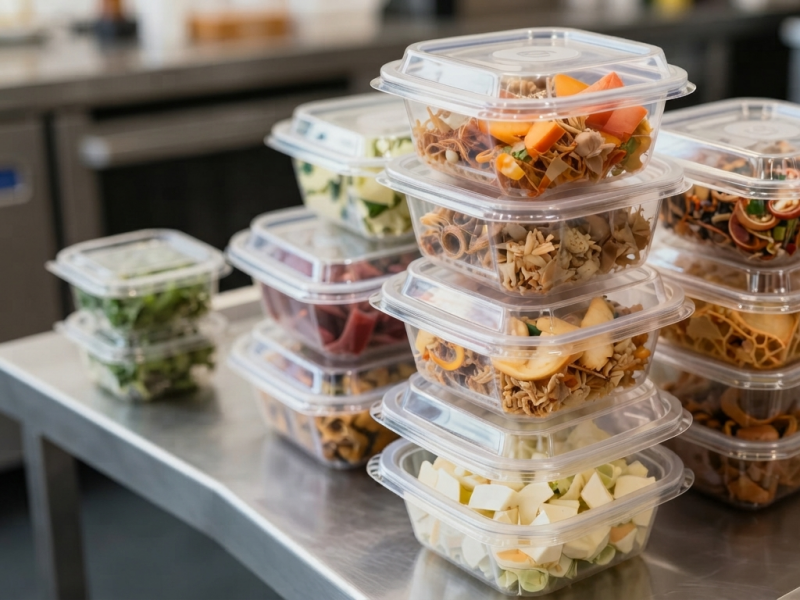
Do not assume a standard PLA container or clear compostable lid is suitable for microwave reheating simply because it is plant-based or compostable.
PLA is used in a range of food-contact products, including clear packaging. The relevant question is not whether PLA is environmentally preferable in a particular disposal system, but whether the specific finished product has been designed and specified for the intended heating conditions.
This also applies to CPLA and other modified or crystallized PLA products. A different processing route can produce products intended for different temperature applications, but the material name alone is still not enough to establish microwave suitability.
A sensible consumer rule is therefore: if a clear compostable component has no identifiable microwave-use instruction, remove it before reheating rather than experimenting with it.
What About Paper and Kraft Food Containers?
Paper packaging can look simple while having a surprisingly complex construction.
A takeaway box may include paperboard plus a moisture or grease barrier, adhesive, printed layer, window, liner, or separate lid. These components matter because microwave performance is determined by the finished package and its intended use, not by the visible paper surface alone.
This is similar to the way coatings change the functional properties of paper cups. For more background on coating structures, see this guide to paper food-contact coatings and their functions.
If a paper or kraft container is explicitly identified as microwave-safe, follow the manufacturer's conditions of use. If the packaging gives no heating instructions and contains an unidentified coating, film, or window, transferring the food is the more reliable option.
Why the Food Inside Changes the Answer
Microwave suitability cannot be reduced to container material because different foods create different thermal conditions.
| Food Type | What to Watch |
|---|---|
| Soup or broth | Hot liquid, steam, and possible pressure under a closed lid |
| Rice, pasta, or prepared meals | Uneven heating and hot areas next to the container wall |
| Greasy or oily foods | Potentially demanding local heat exposure at food-contact surfaces |
| Sweet sauces or high-sugar foods | Localized hot spots during reheating |
| Large or dense portions | Longer heating may be required to warm the center |
This is also why microwave wattage should not be treated as a stand-alone safety number. A 700 W and a 1,200 W microwave can heat the same meal differently, but food quantity, geometry, starting temperature, heating duration, and packaging also affect the final conditions.
Use the heating instructions provided for the meal and the packaging rather than inventing a universal time limit from the material name.
How to Check a Compostable Takeout Container Before Reheating
Step 1: Look for a Microwave Statement
Check the underside of the container, label, sleeve, carton, product page, or technical data sheet. A written microwave-use statement is more useful than guessing from color or texture.
If you regularly deal with takeaway packaging, the related guide on how to identify a microwave-suitable takeout container can help with this first check.
Step 2: Inspect the Lid, Window, and Film
Remove any component that is not confirmed for microwave use. Do not assume a transparent lid has the same specification as an opaque fiber base.
Step 3: Check for Damage
Do not microwave a disposable container that is already cracked, badly soaked, torn, warped, or leaking. Structural damage can make a package unsuitable for further handling even if it was originally designed for reheating.
Step 4: Vent Where Required
A tightly closed lid can trap steam. Follow the package instructions for venting or lid removal, particularly with soups, sauces, and other high-moisture foods.
Step 5: Stop if the Package Changes Shape
Unexpected softening, shrinking, leaking, scorching, seam failure, or deformation is a reason to stop heating. Transfer the food to a known microwave-safe dish before continuing.
For comparison with conventional plastic takeaway packaging, see the guide to microwaving plastic takeout containers and the site's dedicated microwavable food container range.
Common Mistakes to Avoid
Assuming "Plant-Based" Means Microwave-Safe
Feedstock and heating performance are different questions. A plant-derived polymer or fiber can still require specific use conditions.
Treating the Lid and Base as One Material
This is especially risky with fiber bowls and transparent lids. Specify and inspect the complete package.
Using a Compostability Certification as a Heating Rating
A compostability claim tells you about a defined end-of-life pathway. It does not replace microwave-use documentation. Businesses evaluating supplier claims should review the relevant documentation rather than relying only on marketing terminology. YangruiPak's certificates section is an appropriate place to review available compliance information for its products.
Assuming Microwave-Safe Also Means Oven-Safe
Conventional ovens expose packaging to a different heating environment. Never extend a microwave-use claim to baking, grilling, or conventional oven use unless the product is specifically designed for it.
Repeatedly Reusing a Single-Use Container
A disposable package surviving one heating cycle does not mean it has been designed for repeated heating, washing, and reuse. Follow its intended-use specification.
What Foodservice Buyers Should Ask Suppliers
For a consumer, the safest fallback is simple: transfer the food when the package cannot be verified. Restaurants, caterers, meal-prep companies, and distributors need a more systematic approach because customers may reheat the food after purchase.
Before approving a package for a reheatable menu, ask:
- Is the container base intended for microwave reheating?
- Is the matching lid also microwave-safe, or should it be removed?
- What are the documented conditions of use?
- Is the package intended merely to hold hot food, or also to reheat it?
- Does the food-contact surface include a coating or liner?
- Are there restrictions related to oily, wet, or high-sugar foods?
- Which components are compostable?
- Is the compostability claim for industrial composting, home composting, or another defined system?
- What technical documentation or testing supports the supplier's claims?
These questions are more useful than asking simply, "Is it biodegradable?" Businesses selecting packaging for delivery can also review packaging considerations for restaurant foodservice applications.
For ongoing sourcing, supplier process matters as well as material. Guidance on working with a biodegradable packaging supplier can help buyers evaluate specifications, while a documented quality-control process is relevant when consistent dimensions, fit, sealing, and product performance matter across production batches.
FAQ
Can you microwave compostable takeout containers?
Some can be microwaved and some cannot. "Compostable" is not a microwave rating. Check the exact container and lid for microwave-use instructions. If the package cannot be identified or verified, transfer the food to microwave-safe glass or ceramic.
Are sugarcane or bagasse containers microwave-safe?
Microwave-rated bagasse containers are available and molded fiber is widely used for hot-food packaging. However, do not assume every bagasse item has identical performance. Check the specification for the actual container, including its lid and any coating.
Is PLA microwave-safe?
Do not assume standard PLA packaging is suitable for reheating. Use it in a microwave only when the specific finished product is identified for that use.
Can a compostable lid go in the microwave?
Only if the lid itself is intended for microwave use. A package can combine a microwave-suitable base with a lid that has different instructions.
What if there is no microwave-safe symbol?
Look for the product specification or supplier instructions. If you cannot verify the intended use, transferring the food to a known microwave-safe container avoids relying on appearance or material guesses.
Does compostable mean biodegradable?
The terms are related but should not be used interchangeably without defined conditions. A meaningful compostability claim is tied to specific requirements and composting conditions. European Bioplastics likewise recommends that biodegradability claims specify conditions and that compostability claims be supported by relevant standards and certification. Its guidance on biodegradable and compostable plastics provides additional context.
Can a microwave-safe compostable container go in a conventional oven?
Not automatically. Microwave-safe and oven-safe are separate use claims. Use a disposable container in a conventional oven only when the manufacturer explicitly specifies that application.
Bottom Line
Can you microwave compostable containers? Sometimes-but the word "compostable" is not enough to make the decision.
The most reliable approach is to evaluate the package in this order:
- Product: Does the exact item have microwave-use instructions?
- Component: Are the base, lid, coating, and other parts covered by those instructions?
- Material: What is each component made from?
- Use condition: What food is being heated, for how long, and under what conditions?
This approach is more dependable than universal claims about bagasse, PLA, paper, or any other material. It also gives foodservice buyers a practical way to specify packaging that matches how customers actually use it.
If you are choosing containers for a hot-food or takeaway program, start with the intended meal, reheating requirement, lid system, and documented product performance-not the sustainability label alone.