


Introduction
For households and food service businesses, choosing the right plastic food container not only improves food storage efficiency but also helps save space and costs. Both 32-oz and 64-oz containers have their advantages and are suited for different scenarios. This article will take you through an in-depth comparison of the two sizes to help you find the container that best fits your needs.
32 oz vs 64 oz Plastic Food Containers: Key Differences
1. Capacity and Portion Size
The main difference between 32-oz and 64-oz plastic food containers lies in their volume and portion adaptability.
The 32-oz container holds approximately 0.95 liters, making it suitable for single-serving meals or controlled portion sizes. Its capacity allows food to fill the container efficiently, minimizing space while maintaining the integrity of the contents.
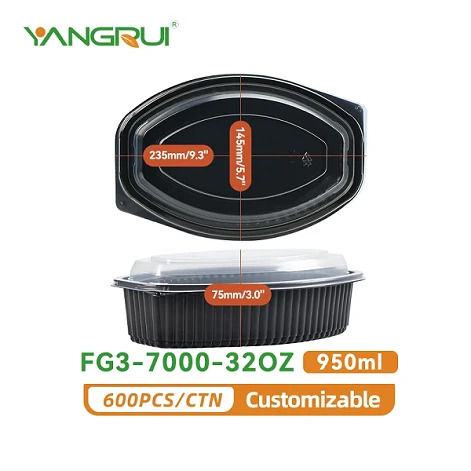
The 64 oz container holds about 1.9 liters, suitable for larger food combinations or items with higher liquid content. It reduces the need for multiple containers while ensuring the food remains evenly distributed and retains its texture, which helps maintain freshness and consistency.
2. Usage Scenarios
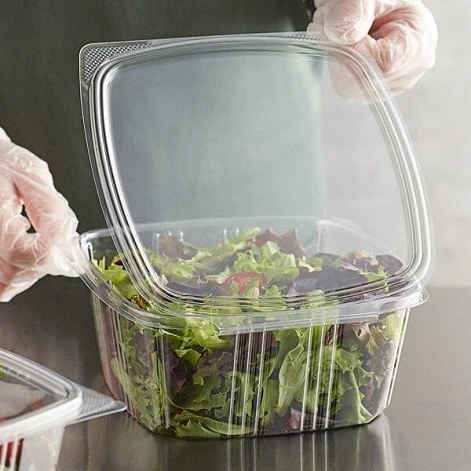
32-oz and 64-oz plastic food containers are suitable for different usage scenarios and needs.
(1) Home Meals
The 32-oz container is suitable for preparing daily meals for one person or a small family, such as lunch boxes, snacks, or leftovers. The 64-oz container is more suitable for family gatherings or preparing multiple servings at once.
(2) Food Delivery and Takeout
The 32-oz container is commonly used for takeaway meals, small dishes, or side items, allowing for standardized portioning and easy customer pickup. The 64 oz container is suitable for larger meals, meal combos, or bulk packaging, meeting the needs of varying portion sizes in food delivery operations.
3. Storage & Space Efficiency
There are clear differences between 32-oz and 64-oz plastic food containers in terms of storage and space utilization:
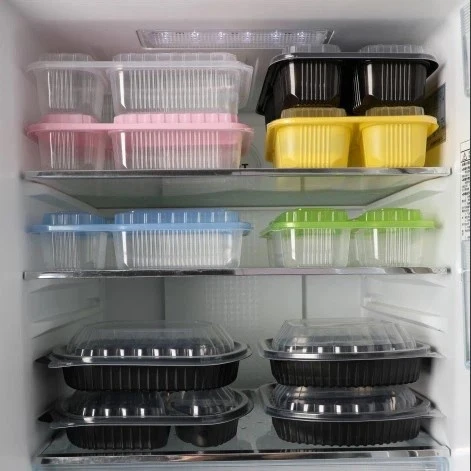
• 32 oz containers: Compact in size, they occupy less storage space and can be arranged and stacked flexibly in refrigerators, freezers, or cabinets. Their lightweight design allows for easy stacking adjustments and quick access to ingredients.
• 64 oz containers: Larger in volume, they occupy more individual storage space but can hold more food at once, reducing the total number of containers needed. Their larger base and sturdy structure make stacking fewer layers more stable and reliable.
4. Portability
Container size directly affects ease of carrying and transporting.
• 32 oz containers: Lightweight and compact, they are easy for a single person to carry or fit into backpacks and lunch bags. Suitable for meals on the go, commuter lunches, or short-distance deliveries, they offer convenience and minimal handling effort.
• 64 oz containers: Larger and heavier, they are better suited for transporting food in bulk or over short distances. While not suitable for personal carrying, they remain stable and secure during family gatherings, group deliveries, or kitchen-to-kitchen transfers.
32 oz vs 64 oz Containers: Which Size Suits You Best?
When choosing between 32-oz and 64-oz containers, consider the following key factors:
(1) Portion Requirements: 32 oz is suitable for single servings or small meals, while 64 oz is better for family-sized portions or multiple servings.
(2) Type of Food: Choose 32 oz for solid meals, bento boxes, or small snacks; 64 oz is suitable for soups, stews, or dishes with a high liquid content.
(3) Meal Prep Frequency: Daily, small-scale meal prep favors 32 oz, while batch cooking or weekly meal prep works better with 64 oz.
(4) Storage Environment: Choose 32 oz containers when fridge or cabinet space is limited; 64 oz containers are better suited for large freezers or commercial kitchen settings.
(5) Operational Consistency: For foodservice operations requiring standardized portions, 64 oz containers reduce repeated portioning and improve efficiency, while 32 oz is suitable for single-serving standardized operations.
Conclusion
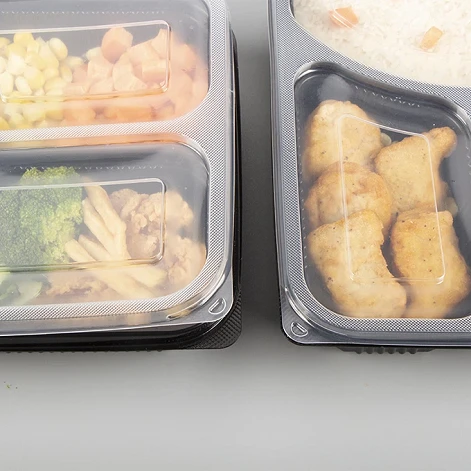
32 oz containers are lightweight and portable, suitable for single servings and small portions, while 64 oz containers offer larger capacity and stability, suitable for family meals or bulk cooking. Considering their different features, you can select the most suitable size based on portion requirements, food type, and storage environment.
YANGRUI: Leading Manufacturer of Plastic Food Containers
YANGRUI offers 32 oz and 64 oz plastic food containers to meet different portion and usage needs. We also provide custom sizes and specifications to help households and foodservice businesses achieve efficient storage, portioning, and delivery. Contact us today for expert advice and customized solutions to make your meal management easier and more convenient!