


This guide covers every major type of disposable flatware on the market: what each material is made from, how it actually performs, where it falls short, and which situations call for which choice. There is also a full comparison table and a practical decision framework so you can move from research to a purchase decision without having to read five separate articles.
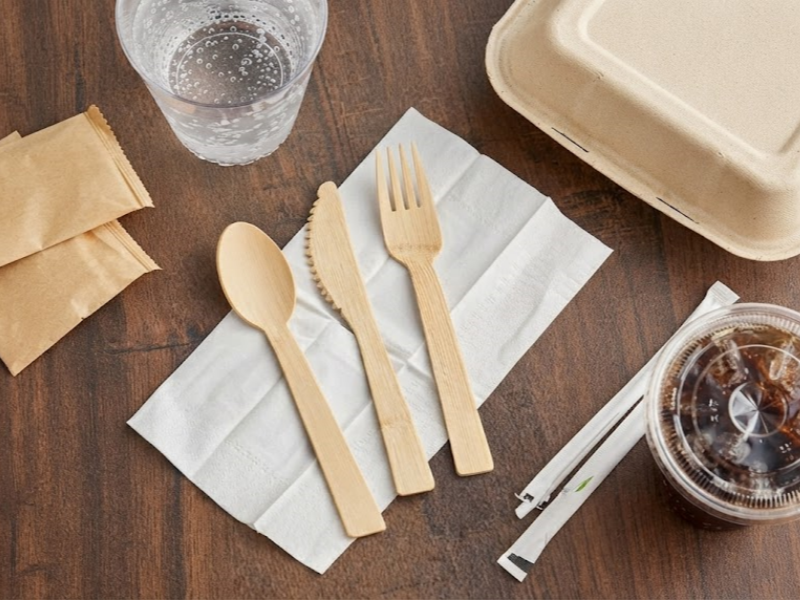
What Is Disposable Flatware?
Disposable flatware refers to single-use eating utensils - forks, knives, spoons, and serving pieces - designed for settings where washing is impractical, hygiene protocols require it, or the operational volume makes reusables unworkable. Unlike plates or cups, flatware carries a structural demand: it needs to hold up under real pressure, resist bending, and in some cases handle hot food without deforming.
The market now spans five main material categories - standard plastic, polypropylene, PLA, bamboo, and wood - plus a growing range of specialty formats. Each comes with trade-offs that directly affect food safety, guest experience, environmental outcome, and cost per unit.
Types of Disposable Flatware by Material
Material is the most important variable in any flatware purchase. It determines heat tolerance, structural strength, environmental impact, and cost. Here is what you need to know about each type.
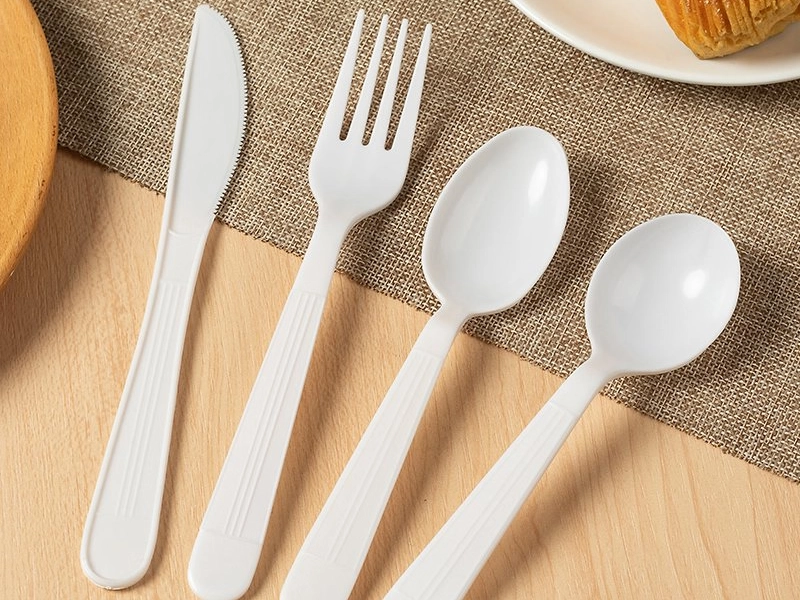
1. Polystyrene Plastic (PS)
Polystyrene is the clear, rigid plastic you find at most quick-service counters. It is inexpensive, widely available, and works well for cold or room-temperature food. The limitations are real, though: PS cracks under sustained pressure, softens when exposed to heat, and is not microwave-safe. It also faces increasing restriction under single-use plastic legislation in states including California, New York, and Washington.
Where it makes sense: high-volume fast food, concession stands, cold grab-and-go items where cost per unit is the primary constraint.
2. Polypropylene (PP)
Polypropylene is a more durable cousin of polystyrene. It handles temperatures up to around 200–212°F (93–100°C), making it suitable for hot entrees, sauced dishes, and takeout that travels. PP flatware tends to be heavier and more flexible than PS without snapping, which is why it dominates the medium and heavy-duty segments. It comes in white, black, and clear finishes.
Where it makes sense: full-service takeout, catering, any setting where food is warm and guests will apply real pressure to the utensils. Our heavy-duty PP utensil sets are a practical starting point for operators evaluating this category.
One limitation worth noting: like PS, PP is petroleum-based and non-biodegradable. Recycling is technically possible but depends on local program acceptance, which varies considerably by municipality.
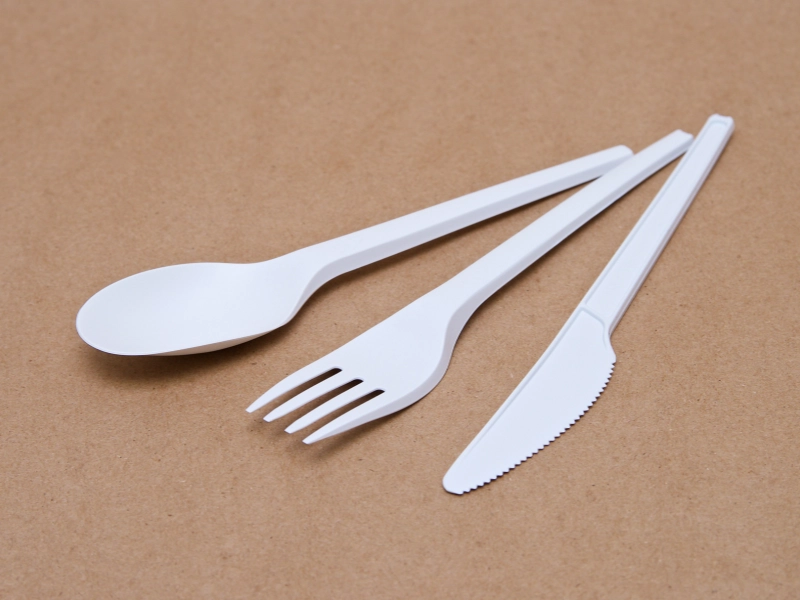
3. PLA (Plant-Based Plastic)
PLA looks almost identical to conventional plastic, which is part of the appeal - and part of the problem. It is made from fermented plant starch (usually corn) and marketed heavily as an eco-friendly alternative. The environmental benefit is real, but only under specific conditions that most buyers do not fully understand before purchasing.
The critical detail: PLA is certified compostable under ASTM D6400, which means it breaks down in industrial composting facilities that maintain sustained temperatures above 130°F (55°C). It will not decompose meaningfully in a home compost pile, and in a landfill it behaves essentially like conventional plastic. If your operation or event does not have access to industrial composting pickup, the environmental case for PLA weakens considerably.
There is also a performance issue: most standard PLA utensils begin to soften above 110°F (43°C). That rules out hot soups, steam-table service, and anything served in a warm environment. Operators who switch to PLA without reading this spec frequently end up with deformed utensils and frustrated customers.
Where it makes sense: cold food service, events with confirmed industrial composting infrastructure, venues pursuing sustainability certifications. For more on what compostable actually means in practice, see our overview of biodegradable and compostable packaging.
4. Bamboo
Bamboo flatware is made from compressed or molded bamboo fiber. From a material standpoint, it is one of the more genuinely low-impact options in this category - the plant grows rapidly, regenerates after harvesting without replanting, and requires minimal inputs. Structurally, it handles both hot and cold foods well and has a natural look that works for upscale catering and eco-conscious events where presentation matters.
Two things to watch for when sourcing bamboo flatware. First, quality varies significantly. Lower-cost options sometimes use chemical binding resins or bleaching agents that reduce the sustainability benefit. Look for products that are certified resin-free and third-party verified - BPI certification (Biodegradable Products Institute) is one indicator worth checking. Second, bamboo is not universally accepted in industrial composting streams, so check with your composting provider before making sustainability claims to customers.
Where it makes sense: upscale catering, hospitality settings, eco-conscious events, restaurants building a sustainability brand. Higher cost than plastic, but the aesthetic and durability often justify the premium at the right price point.
5. Birchwood
Birchwood flatware is a different product from bamboo, though buyers sometimes confuse the two. It is cut from thin birch veneer, has a clean natural appearance, and - unlike PLA - is home-compostable and biodegradable without requiring industrial infrastructure. That makes it a more reliable eco choice for operators without composting access.
The trade-off is moisture sensitivity. Birchwood absorbs liquid over time, which can soften the wood and reduce structural integrity with very wet foods or long service windows. It works best for lighter applications: desserts, appetizers, tasting events, picnics, and food festivals. For a heavier main course with sauce, polypropylene or bamboo will perform more reliably.
Where it makes sense: tasting stations, dessert bars, outdoor dining events, food packaging with an artisan aesthetic. It is also the stronger environmental choice compared to PLA when industrial composting is not in the picture - a comparison worth understanding before deciding between the two. Our post on eco-friendly materials covers some of these trade-offs in broader context.
Material Comparison at a Glance
The table below summarizes the key decision variables across all five material types. Use it to narrow your options before requesting samples.
| Material | Heat Resistance | Structural Strength | Compostable? | Relative Cost | Best Fit |
|---|---|---|---|---|---|
| Polystyrene (PS) | Low - cold only | Medium | No | $ | Fast food, concessions |
| Polypropylene (PP) | Medium-High (~212°F) | High | No | $–$$ | Takeout, catering, hot food |
| PLA | Low (<110°F) | Medium | Industrial only | $$ | Cold food, composting venues |
| Bamboo | High | High | Limited | $$$ | Upscale catering, eco events |
| Birchwood | Medium | Medium | Yes - home and industrial | $$ | Tastings, desserts, light fare |

Disposable Flatware Weight: Light, Medium, and Heavy Duty
Weight (sometimes called gauge) describes the thickness and density of the flatware. It is a variable that operators underestimate until they have an incident - a light-gauge fork snapping under a chicken thigh at a catered event, for example, or a guest bending a spoon trying to scoop dense ice cream.
Lightweight
Thinnest option. Suited for dry snacks, desserts, and small portions where pressure is minimal. Cost-efficient for high-volume, low-demand applications. Not appropriate for entrees or foods that require cutting.
Medium Weight
The default choice for most casual foodservice. Handles salads, pasta, sandwiches, and standard lunch and dinner items without flexing or snapping. If you are unsure, medium is the safer starting point - it performs across a wider range of situations without the price premium of heavy-duty.
Heavy Duty and Extra Heavy Duty
Designed to perform closer to reusable flatware in terms of rigidity and feel. The right choice for full-service catering, protein-heavy entrees, buffet service, and any setting where structural failure would reflect poorly on the operation. Extra heavy-duty options are also standard in hospitals and institutional foodservice where reliability is non-negotiable.
Specialty Disposable Flatware
Beyond fork-knife-spoon sets, several specialty formats serve specific operational needs. These are available through our full cutlery and accessories range.
Disposable Serving Utensils
Serving spoons, tongs, ladles, and cake servers in disposable format. Used at buffets, catering setups with multiple stations, and high-volume events where laundering serving pieces between uses is not practical. Typically heavy-duty polypropylene. Sanitation is the main driver here - dedicated disposable serving utensils reduce cross-contamination risk in open-service environments.
Mini and Tasting Flatware
Smaller-scale forks, spoons, and picks for appetizers, amuse-bouches, dessert tastings, and food festival portions. Wooden and bamboo options are popular for upscale presentations where even the utensil contributes to the aesthetic. Plastic versions work for high-volume tasting events where cost is the priority.
Individually Wrapped Flatware
Pre-packaged utensils in film or paper sleeves - sold as individual pieces or as complete kits (fork, knife, spoon, napkin). Standard for food delivery, airline catering, hospital trays, and any setting where tamper-evidence and hygiene assurance matter. The wrapping adds per-unit cost but provides something that loose utensils cannot: a visible seal that the item has not been handled. See our range of individually wrapped cutlery for available formats.
How to Choose the Right Disposable Flatware
Material and weight knowledge only gets you so far. The practical question is which combination fits your specific operation or event. Here is a scenario-based breakdown.
By Business Type
- Fast-casual restaurant or food truck: Medium-weight polypropylene. Durable enough for real meals, priced for daily volume. Visit our fast food operator resources for packaging combinations that work alongside it.
- Full-service catering company: Heavy-duty polypropylene or bamboo, depending on the event aesthetic and your sustainability positioning. Heavy PP for everyday contracts; bamboo when the client brief calls for premium or eco credentials.
- Food delivery or ghost kitchen: Individually wrapped medium-weight kits. Tamper-evident and hygienic for off-premise consumption. Removes the manual bundling step that slows down high-volume packing.
- Hospital or institutional foodservice: Heavy-duty polypropylene with individually wrapped kits. Structural reliability and hygiene are the two requirements that cannot be traded off against cost.
- Coffee shop or dessert bar: Lightweight or medium birchwood or PP. Dessert and snack portions do not demand heavy-gauge utensils, and the aesthetic of birchwood pairs well with specialty food environments.
By Event Type
- Outdoor wedding or upscale reception: Bamboo or birchwood. The natural aesthetic reads as intentional rather than default, and it supports a sustainability narrative if that matters to the client. Resources for event and party operators cover broader tableware decisions.
- Corporate lunch or office catering: Medium-weight polypropylene utensil kits. Practical and cost-effective at volume.
- Food festival or farmers market: Birchwood or PLA with confirmed on-site composting. The natural material fits the context; confirm your composting access before committing to PLA specifically.
- Restaurant dine-in service: Heavy-duty PP as the operational default. Premium material options for the dining room if brand positioning calls for it. See how other restaurant operators approach tableware decisions.
By Budget
Cost increases roughly in this order: standard PS → polypropylene → birchwood → PLA → bamboo. For high-volume operations, the per-unit difference compounds quickly. A heavy-duty polypropylene fork typically runs 40–60% less than a comparable bamboo fork at similar order quantities. Before committing to a premium material across your entire operation, run the math on weekly or monthly usage. A hybrid approach - premium material for dine-in, standard PP for delivery - often delivers the best balance of cost, performance, and brand consistency. Whatever the material, verifying FDA food-contact compliance before ordering should be standard practice, particularly when sourcing from new suppliers.
5 Buying Mistakes Worth Avoiding
These come up regularly and are avoidable with upfront planning.
- Using PLA with hot food. Most standard PLA flatware begins to deform above 110°F. The result is collapsed spoons and bent forks - a common complaint from operators who switch to "eco-friendly" PLA without checking the temperature specs. If your menu includes hot food, choose PP, bamboo, or birchwood instead.
- Assuming "compostable" means home-compostable. It usually does not. Compostable under ASTM D6400 requires industrial composting conditions. Before using compostability as a selling point to customers, confirm your local composting access. If it is not available, consider birchwood - it is genuinely home-compostable and biodegradable.
- Choosing lightweight flatware for heavy entrees. Lightweight gauge is designed for light-duty applications. Using it for catered chicken, dense pasta, or anything that requires sustained cutting pressure will result in bent or broken utensils. When in doubt, size up - the cost difference per unit is small relative to the service risk.
- Comparing individual pieces instead of kit pricing. Individual utensils look cheaper per piece on a catalog, but pre-assembled kits (fork, knife, spoon, napkin) are often more cost-efficient for delivery or catering contexts where you would manually bundle them anyway. Run the full cost-per-cover calculation before deciding.
- Skipping compliance verification on new suppliers. Not all imported disposable utensils meet FDA food-contact material standards. When working with a new vendor, request documentation confirming compliance with FDA 21 CFR regulations before placing a production order. Our quality control process and certification documentation are available for review if you are evaluating us as a supplier.
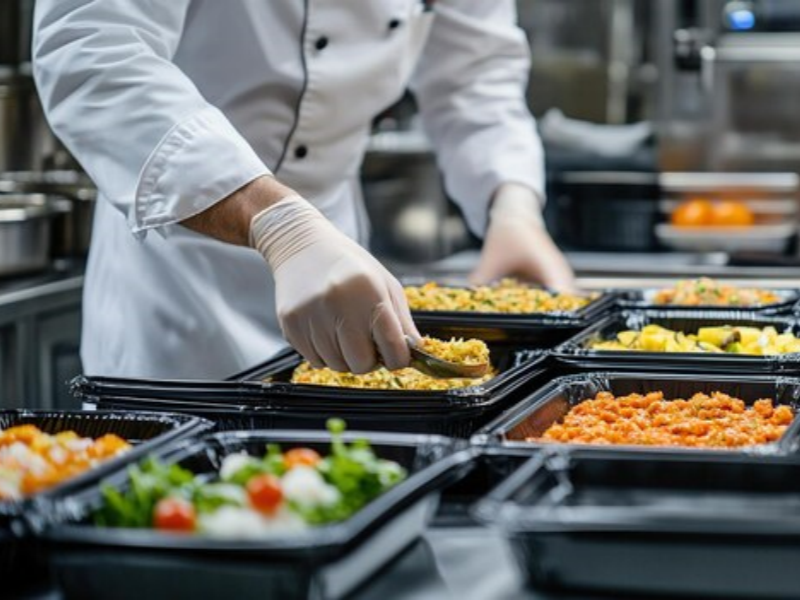
Eco-Friendly Disposable Flatware: Cutting Through the Marketing
Sustainability claims in this category are inconsistent, and the gap between marketing language and actual environmental outcome can be significant. A clear-eyed summary:
- Standard plastic (PS/PP): Petroleum-based, not biodegradable, and recyclable only where local programs accept it. Increasing regulatory pressure in the U.S. and EU is tightening restrictions on single-use formats.
- PLA: Plant-derived and certifiably compostable, but requires industrial infrastructure to deliver on that promise. In the absence of industrial composting access, its environmental advantage over conventional plastic largely disappears.
- Bamboo: Low-impact from a material sourcing standpoint, but verify that the specific product is resin-free and third-party certified. The sustainability story is real when the product is made correctly.
- Birchwood: Home-compostable, biodegradable, and sourced from a renewable resource. For most operations without industrial composting access, it is a more reliable eco choice than PLA.
Before committing to any "green" material, verify two things: whether industrial composting pickup exists in your area, and whether your supplier's claims are backed by recognized third-party certifications such as BPI or ASTM D6400. Our sustainability approach covers how we think about these trade-offs in our own product development.
FAQ
Q: What is the most eco-friendly disposable flatware?
A: It depends on your local infrastructure. Birchwood is home-compostable and biodegradable without requiring industrial processing, making it the more reliable choice for most operations. PLA has genuine eco credentials but only when sent to an industrial composting facility - which is unavailable in many areas. Bamboo is a strong option when sourced from verified, resin-free manufacturers.
Q: Can PLA utensils be used with hot food?
A: No. Most standard PLA flatware begins to deform at temperatures above 110°F (43°C). It is suitable for cold or room-temperature service only. For hot food, polypropylene, bamboo, or birchwood are the appropriate choices.
Q: What is the difference between PLA and regular plastic flatware?
A: PLA is made from fermented plant starch rather than petroleum, and it is certified compostable under specific industrial conditions. Regular plastic (PS or PP) is petroleum-derived and non-biodegradable. In performance terms, PP outperforms PLA on heat resistance and structural strength. PLA's advantage is compostability - but only where the infrastructure to compost it actually exists.
Q: What weight of disposable flatware is best for catering?
A: Heavy-duty or extra heavy-duty. Catering events typically involve full meals with proteins, sauces, and varied textures. Medium-weight flatware may flex or snap under pressure, which reflects on the event quality. Heavy-duty polypropylene or bamboo deliver the rigidity that guests expect from a catered experience.
Q: Are bamboo utensils better than plastic?
A: It depends on the metric. On sustainability, yes - bamboo is renewable, low-impact, and stronger than most plastics. On cost, no - bamboo costs more per unit and has more limited SKU options. On heat resistance and structural strength, bamboo outperforms standard PS and is comparable to heavy-duty PP. Whether the premium is justified depends on your price point and what your customers expect.
Q: Can you compost PLA utensils at home?
A: Generally no. PLA requires industrial composting conditions - sustained heat above 130°F and specific microbial activity - to break down within any reasonable timeframe. In a home compost pile, PLA will persist for years rather than months. If home compostability matters to your operation, birchwood is the more reliable alternative.
Q: How many disposable utensils do I need per person?
A: For a standard seated meal, plan one fork, one knife, and one spoon per person per course. For buffet or extended service, add 20–25% overage to account for dropped utensils or guests returning for additional portions. For cocktail-only events with finger food, cocktail forks and napkin picks are usually sufficient.
Q: Is disposable flatware safe for food use?
A: Yes, when sourced from suppliers with documented FDA food-contact compliance. In the U.S., food-contact materials including disposable flatware must meet FDA regulatory requirements. When evaluating new suppliers - particularly international ones - request compliance documentation before placing orders. Do not assume compliance based on product labeling alone.
Choosing the Right Flatware: A Practical Summary
For most high-volume operations, heavy-duty polypropylene is the workhorse choice - reliable, food-safe, cost-efficient, and available in a wide range of formats. Bamboo and birchwood make sense when aesthetics or sustainability are part of the value proposition, and PLA is a viable choice when industrial composting access is confirmed. Lightweight PS still has a place for cold, low-pressure applications where cost per unit is the primary driver.
The best buying decision starts with your actual service context: what food you are serving, at what temperature, to how many people, and what your guests expect from the experience. Use the comparison table and scenario framework in this guide to narrow the field, then request samples from shortlisted suppliers before committing to volume.
If you are sourcing at scale, our team can help match material and format to your specific requirements - starting with a review of our full cutlery and accessories range or a direct conversation through our contact page.