


The right takeout container depends on the food, not the price per unit. Bagasse handles hot, greasy entrees and holds up to 250°F without warping. Clear PET is built for cold presentations where the food needs to be visible before the lid comes off. Microwave-safe PP is the practical choice for anything a customer will reheat at home. For soups and anything liquid-heavy, only a round format with a locking lid belongs in the delivery bag. Match material to food first - cost is a secondary variable.
This guide is based on YANGRUI's 10+ years of manufacturing experience producing food containers for restaurants, ghost kitchens, catering operators, and food service brands across North America and Asia.
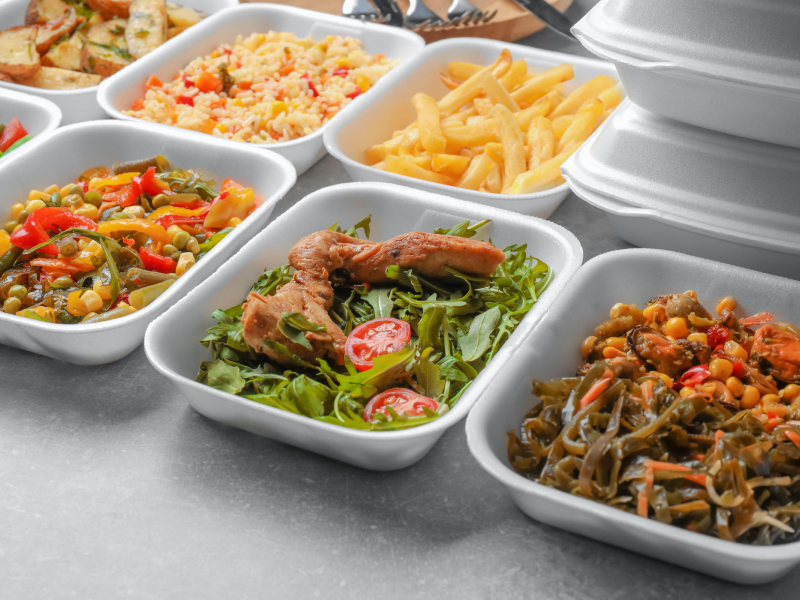
Why Most Takeout Containers Fail - and How to Choose One That Won't
The Leak Problem
Gravy, broth, and sauces find every structural weakness - a thin foam base, a loose hinge, a lid that fits but doesn't lock. Within 20 minutes of transit, any container that wasn't built for liquids will tell you so. The practical fix isn't finding a better clamshell. It's using a purpose-built round format with a snap or screw-top lid for anything with real moisture content. Round leak-proof bowls with secure lids are the right format for soups and broth-based dishes. Sauces go in separate portion cups with lids - not loose inside the entree container.
The Food Quality Problem
Crispy food dies in sealed containers. Steam builds up, softens the crust, and by the time the order arrives, the texture your kitchen produced is gone. Fries, fried chicken, tempura - anything that depends on surface crunch needs a vented format or an open-top tray, not a tighter-sealing clamshell. The other variable most operators underestimate is delivery distance. A container that handles a 10-minute pickup can fail on a 40-minute third-party delivery run. Insulation, denser material walls, and secure lid seals matter in proportion to how far your food actually travels.
The Eco-Claim Problem
Compostable, biodegradable, and recyclable are three different things, and customers who read packaging know the difference. Compostable containers certified under ASTM D6400 break down within 90 to 180 days - but only in a commercial composting facility. Most U.S. households don't have curbside access to one, so compostable containers frequently end up in landfills where they decompose no faster than conventional plastic. Biodegradable has no regulated U.S. definition. Recyclable is the most consistently achievable claim in most municipalities, as long as the material isn't contaminated.
The practical takeaway: if your market has commercial composting access, certified compostable bagasse or PLA is the stronger environmental choice. If it doesn't, recyclable PP or PET often has a lower real-world impact. The eco-friendly takeout packaging guide covers how to evaluate these claims across material types.
PFAS Compliance: What U.S. Operators Need to Verify Before They Source
PFAS (per- and polyfluoroalkyl substances) are chemicals used in some food packaging coatings to resist grease and moisture. They've been detected in certain bagasse, paper, and molded fiber containers - which matters because state-level prohibitions are already in effect. California's AB 1200 (effective January 2023), New York, and Washington have all enacted restrictions on PFAS in food contact materials, and more states are following. The FDA's food contact substances program continues to update its guidance as the regulatory landscape evolves.
For operators sourcing containers for U.S. markets, PFAS-free is now a baseline compliance requirement in a growing number of jurisdictions, not a premium specification. The verification standard matters: require third-party test documentation, not a supplier declaration on a spec sheet. YANGRUI's food-contact safety certifications provide the relevant documentation, and third-party lab results are available on request.
Takeout Container Materials Compared: Bagasse, PP, PET, Kraft, and Aluminum
Bagasse (Sugarcane Fiber)
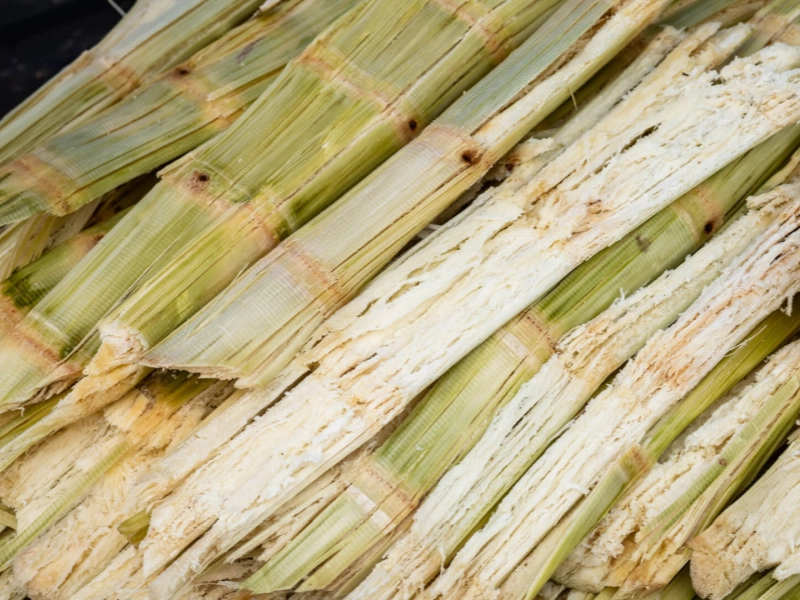
Bagasse is the fibrous pulp left after sugarcane stalks are pressed for juice. It resists grease, holds structural integrity under steam, and tolerates up to 250°F - better than most single-wall plastics. Its weakness is sustained cold moisture: a bagasse bowl holding a high-liquid salad for 45 minutes will soften at the base.
For hot entrees, burgers, fried food, and composed plates, it's among the strongest options available - and the sustainability claim is traceable because the material origin is verifiable. YANGRUI's compostable clamshell bagasse containers carry PFAS-free verification and are built for hot takeout delivery. For soups and noodle dishes specifically, the bagasse soup and pasta bowl with lid is the right format. If you're deciding between bagasse and plastic for a specific application, the detailed bagasse vs. plastic comparison covers cost and performance tradeoffs side by side.
PP and Black MFPP (Polypropylene)
PP handles the full lifecycle: packed hot, held in a delivery bag for 40 minutes, then reheated in the customer's microwave the following morning. PET can't do the last step. Foam doesn't hold up in the middle one. PP does all three reliably, which is why it's the default for high-volume operations.
Black MFPP (mineral-filled polypropylene) adds a presentation dimension that matters for delivery-first brands. The matte black finish photographs well and signals quality in a way that white foam containers simply don't - which is why it's become the standard for casual-upscale restaurants and ghost kitchen brands. The black MFPP microwaveable take away container covers the core use case. For anyone still deciding between PP, PET, and PS across their menu, the PP vs. PET vs. PS breakdown lays out when each material is the right call.
Clear PET (Cold Applications Only)
When food needs to be seen before the lid comes off - salads, grain bowls, pastries, sushi, grab-and-go - clear PET is the right format. A fogged container on a premium product undercuts perceived quality before a single bite. PET softens above 140°F, so it's strictly a cold-application material. Anti-fog coating matters for refrigerated cases and humid delivery bags; YANGRUI's clear food containers include this treatment.
Kraft Paper
Kraft paper containers handle dry-to-moderate moisture content well and carry clean recyclability credentials. They're not designed for high-liquid dishes - grease from heavier foods will eventually soak through without a barrier coating. For sandwich counters, bakeries, and fast casual operations, kraft is a practical, cost-effective middle ground.
Multi-Compartment Containers
A protein, starch, and vegetable that arrive separated in a divided container are the dish the customer ordered. The same components arriving combined are something else. For meal kits, multi-item lunch programs, and any operation sending composed plates, compartmented containers are the right format - not a workaround. The leak-proof compartment meal prep containers handle multi-component deliveries with dividers that actually hold under transit pressure.

Which Container Works for Which Food: A Quick-Reference Guide
- Burgers and hot sandwiches: Bagasse clamshell or black MFPP hinged lid. Test the hinge closure under the weight of a fully loaded burger before committing to a SKU - a hinge that pops open mid-delivery is a refund.
- Salads and cold bowls: Clear PET with anti-fog coating. Dome lids prevent compression on leafy tops; flat lids stack more efficiently in refrigerated cases.
- Soups, ramen, broth-based dishes: Round format with a locking lid. Conduct the inversion test before ordering in bulk: close the lid, flip it upside down over a white surface, hold for 60 seconds. If liquid seeps through, that container is wrong for the application regardless of cost. For guidance on packaging soups specifically for transit, transporting soup for takeout covers the key considerations.
- Fries and crispy items: Vented paper cup or open-top tray. Sealed containers create internal steam that destroys crust texture before delivery.
- Composed hot plates for delivery: Black MFPP for operations that prioritize presentation; compostable bagasse for operators with verified PFAS-free, compostable requirements.
- Multi-component meal prep: Compartmented PP with leak-proof dividers between sections.
- Bakery and pastry: Clear PET for visual presentation; kraft paper for operations with natural-brand positioning.
- Sauces and condiments: Always in separate portion cups - never packed loose inside the main container.
How to Test a Takeout Container Before You Order in Bulk
Unit price alone is the wrong metric. A container that costs less per unit but causes one in twenty orders to leak generates a refund, a negative review, and a lost customer. The real test is operational: fill it with your actual food at pack temperature, seal it normally, and run it through your actual delivery window. For liquid resistance, invert a filled sample over a white surface for 60 seconds. If anything seeps through, it's the wrong container regardless of price.
Custom specifications - size, lid type, compartment count, color, and logo printing - can all be confirmed at the sample stage before production begins. The quality control process covers what's verified at each stage before containers ship.
FAQ
Q: What is the best material for hot food takeout containers?
A: Bagasse and MFPP polypropylene are the two most reliable options for hot food. Bagasse tolerates up to 250°F and resists grease without softening. MFPP is microwave-safe, so customers can reheat in the same container at home rather than transferring food. Avoid PET for anything above 140°F - it warps and the material is not rated for food-contact heat at that level.
Q: Are compostable takeout containers actually better for the environment?
A: Only when composted in a commercial composting facility. ASTM D6400-certified compostable containers break down within 90 to 180 days under those conditions - but most U.S. households don't have direct access to commercial composting. Without that infrastructure, these containers end up in landfills and decompose no faster than conventional plastic. In markets with access, they're the stronger environmental choice. Where access is limited, recyclable PP or PET often has a lower real-world impact.
Q: What's the difference between compostable and biodegradable packaging?
A: Compostable has a legal definition: packaging must meet ASTM D6400 standards and break down within a certified timeframe in commercial composting conditions. Biodegradable has no regulated U.S. definition - it simply means the material will eventually break down, with no required timeframe. When reviewing supplier claims, look for compostable certification from an independent testing body, not generic biodegradable language on a spec sheet.
Q: How do I verify a supplier's PFAS-free claim?
A: Ask for third-party laboratory test results showing PFAS levels below applicable state thresholds - not a supplier self-certification or a line in a product description. The report should name the testing body, the method used (typically EPA Method 533 or 537.1 for food packaging), and the specific compounds tested. A manufacturer with PFAS-free product lines will have this documentation readily available.
Q: How do I prevent soup from leaking during delivery?
A: Use a round container with a snap-fit or screw-top lid. Before ordering in bulk, fill a sample container with water, close the lid, and invert it over a white surface for 60 seconds. If anything seeps through, that container is the wrong format for liquid dishes. Pack all sauces and condiments in separate portion cups - not loose inside the main container, regardless of how contained they seem when packed cold.
Q: Can I order takeout containers with my logo?
A: Yes. Size, lid format, compartment configuration, color, and logo printing can all be specified before production begins. First-run lead time is typically four to six weeks from artwork sign-off. The plastic takeout box customization page covers what's configurable across formats and materials.