


When sourcing microwave safe to-go containers for a restaurant, delivery service, or catering operation, the label is where the process starts, not where it ends. This guide covers what the regulatory standard actually requires, which materials hold up and which don't, how to test before committing to bulk, and the mistakes that cost food businesses the most.
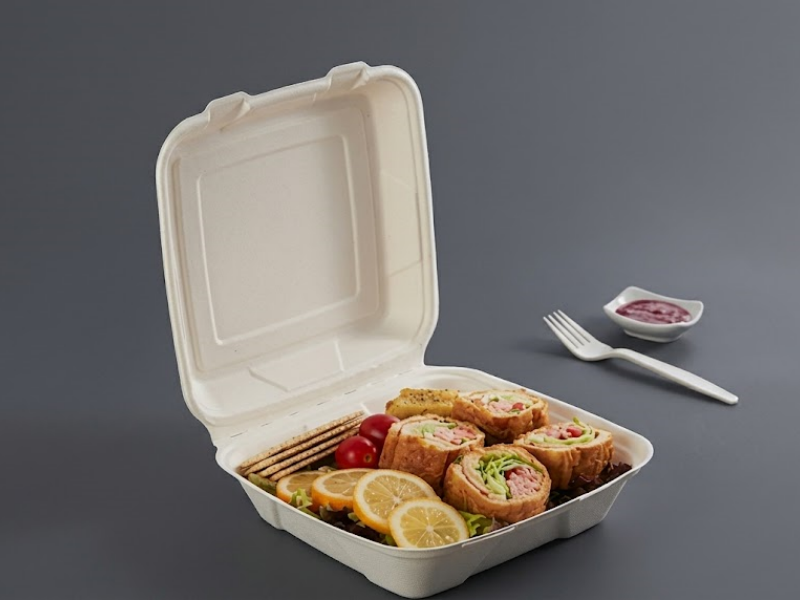
What "Microwave Safe" Actually Means - and What It Doesn't
In the United States, the FDA regulates food contact materials including plastic food packaging under 21 CFR Part 177, which governs polymer-based materials used in food handling and packaging. For a container to be described as microwave safe, it must be tested to confirm it won't transfer harmful substances into food under heating conditions and won't deform in a way that compromises food safety.
Manufacturers aren't required to use the label - but when they do, it must be backed by testing. From a supplier with proper documentation, the label carries real weight. From a supplier who can't produce it, it's just ink.
A few things the label doesn't cover:
- The lid isn't automatically included. Lids are often a different resin from the container base. A PP #5 base with a PS #6 lid is common in lower-cost products - and only one of those resins is suitable for microwave use. Verify each component separately.
- High-fat and high-sugar foods are a different heat environment. Water-based dishes are capped at around 100°C; fats and sugars can exceed this substantially in the microwave. A container rated for soup may deform under a fatty curry.
- "Microwave safe" covers standard reheating, not sustained high-power cooking. Most containers are tested for typical reheat cycles, not extended full-power use.
Which Container Materials Are Microwave Safe?
Polypropylene (PP #5) and MFPP
PP #5 is the industry standard for microwavable food packaging. It's BPA-free, recognized by the FDA for food contact use, and stable at the temperatures food reaches during microwave reheating. Identify it by the recycling triangle with the number 5, or the abbreviation "PP" on the container base.
MFPP - Mineral-Filled Polypropylene - is a denser PP variant used widely in foodservice takeaway. Black MFPP hinged-lid containers and white MFPP formats are both common in restaurant takeaway. Because MFPP is PP-based, it carries the same microwave compatibility - but confirm that your specific product carries an explicit microwave safe designation, as formulations vary.
Thinner-walled PP containers (below roughly 1mm) are more prone to deformation under sustained contact with high-fat food. If your menu includes oil-rich dishes, request wall thickness specifications before ordering.
Paper Containers: The Coating Is What Matters
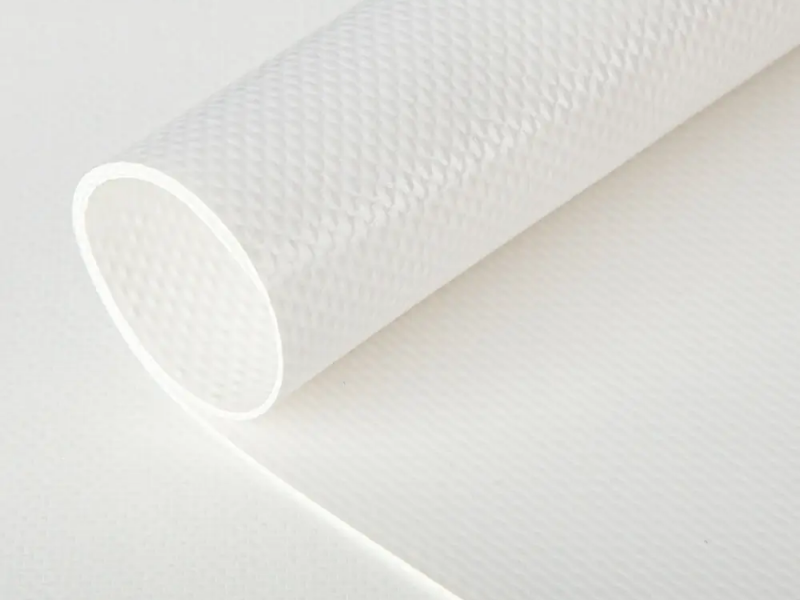
Paper containers are standard in quick-service and fast-casual settings. Whether they're microwave safe depends entirely on the coating:
- PE-coated paper (polyethylene) is moisture-resistant and holds up well for standard reheating. This is the version to look for.
- PLA-coated paper is plant-derived and marketed as eco-friendly, but standard PLA begins to soften at around 50–55°C - well within the range that food reheating reaches. PLA-coated containers should not be microwaved. This is one of the most common errors when switching to greener packaging: compostability and heat tolerance are entirely separate properties.
- Uncoated paper loses structural integrity rapidly under heat and moisture. Not suitable for any hot food reheating.
For operations prioritizing sustainability alongside microwave compatibility, the practical choice is PE-coated paper or bagasse - not PLA. Our sustainability page covers material options and certifications for eco-focused operations.
Bagasse and Bamboo Fiber
Sugarcane bagasse and bamboo fiber containers are generally microwave safe for standard reheating, typically rated to 95–110°C depending on the manufacturer. The combination of compostability and microwave compatibility makes them practical for quick-service restaurants with sustainability goals. Our compostable bagasse clamshell containers are used across burger, rice box, and noodle formats in quick-service settings. The limitation is sustained contact with oil-rich foods at higher temperatures - for those, PP or MFPP is more reliable.
Materials That Should Never Go in the Microwave
| Material | Why It's a Problem |
|---|---|
| Polystyrene (PS #6 / Styrofoam) | Softens under microwave heat; risk of chemical transfer into food |
| PVC (#3) | Can release plasticizers when exposed to microwave heat |
| Standard PLA-coated containers | PLA softens at ~50–55°C; unsuitable for any heated food application |
| Foil containers or metallic-embellished packaging | Fire and arcing hazard in any microwave |
| Black plastic from unverified sources | Resin composition may be unknown - see note below |
A note on black plastic: In January 2024, Toxic-Free Future published research identifying hazardous flame retardants - some associated with recycled electronics - in black plastic food containers sampled from major US and European retailers. Black PP containers from verified food-grade manufacturers are not the subject of this research, but it underscores why material documentation matters for any black plastic sourced for hot food. If a supplier cannot confirm resin type and food-contact compliance in writing, that risk isn't worth taking. More context: are black plastic takeout containers safe to use?
For a comparison of PP, PS #6, and PET across different packaging applications: PP vs PS #6 vs PET: choosing the right material for microwavable containers.
How to Test a Container Before Committing to Bulk
Every supplier will confirm their containers are microwave safe. The only reliable way to know whether that holds for your specific food is to test it yourself before ordering volume.
- Fill the sample container with your most demanding dish - something high-fat or high-sugar, not a water-based item. Fats and sugars generate more heat in a microwave than water, and that's where most containers fail.
- Close the lid as a customer would. Most customers microwave with the lid on.
- Run 90 seconds at 800–1,000W. Inspect. If it passes, run a second 60-second cycle.
- Check for: warping of the base or walls, lid failure or seal compression, any unusual odor, and after cooling, whether the base feels soft or tacky.
- Repeat from refrigerator temperature to replicate a customer reheating leftovers the next day.
Any failure on a dish you actually serve means the container isn't right for your operation. This fifteen-minute test is the single most effective quality check most buyers never run. For help interpreting what you find: how to know if your takeout container is microwave safe.
Matching Containers to Your Menu and Operation
By Food Type
- High-fat dishes (curries, cream-based sauces, fried food with heavy sauce): PP #5 or MFPP with confirmed wall thickness and documented performance for fat-rich food. Bagasse works for lower-fat items in this category, but for heavily oil-rich dishes, PP is safer.
- Soups and broths: Round PP containers with a vent mechanism in the lid. Steam pressure is the main failure point - sealed lids without venting pop or deform. Our leak-proof meal prep containers address this with a structured lid and seal design.
- Rice, noodles, and grain-based dishes: A wider range of materials performs well here. PE-coated paper, bagasse clamshells, and PP all work for standard reheating of dry or semi-dry food.
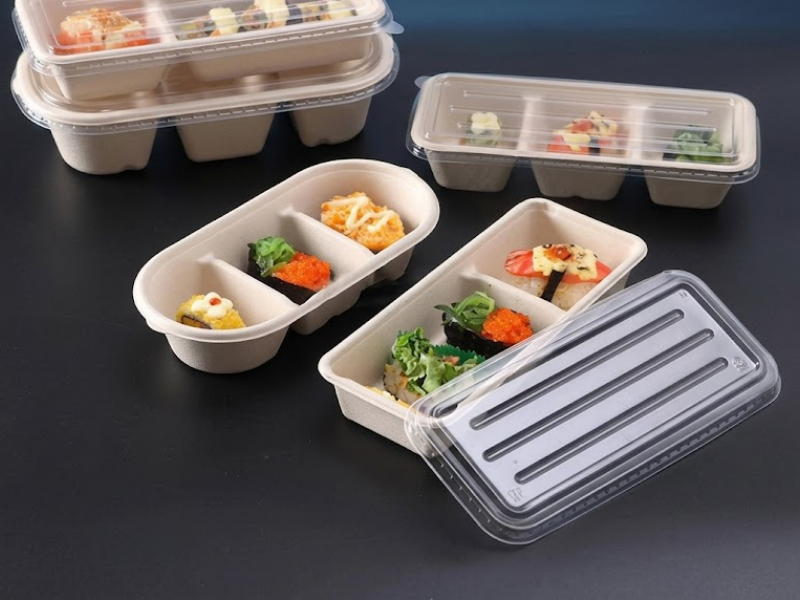
- Multi-component meals: Compartment trays in PP prevent sauce migration between sections during reheating. Browse our plastic microwavable containers range for available tray and single-compartment formats.
By Operation Type
| Operation | Recommended Volume | Primary Requirement |
|---|---|---|
| Restaurant takeaway | 500–1,000ml | Leak-proof seal, stackable, secure lid closure |
| Meal prep / delivery | 750–1,200ml | Freezer-to-microwave rated, airtight seal |
| Quick-service / street food | 300–750ml | Fast-close lid, heat retention |
| Catering | 200–500ml | Lightweight, easy to open, presentable |
Buying Mistakes Worth Knowing
Treating all plastic containers as microwave safe. Only PP #5 and MFPP are formulated and tested for this. Polystyrene (PS #6), PVC, and containers from unidentified recycled plastic are not. The recycling number on the base is the fastest check available.
Not checking the lid separately. A PP base with a PS #6 lid is a common pairing in lower-cost container ranges. Ask your supplier to confirm the microwave rating for each component independently before accepting any set.
Assuming compostable means microwaveable. PLA is compostable and unsuitable for microwave use. Bagasse is compostable and microwave safe. The material chemistry determines thermal performance - not the eco-label.
Committing to volume without testing. A spec sheet reflects the manufacturer's test conditions. Your heat test tells you what happens with your food. Both matter; most buyers only check the spec sheet.
Selecting for ideal customer behavior. Customers microwave containers with lids closed, at full power, for longer than instructed. Test your packaging under those conditions - not the recommended ones.
A useful checklist for before any bulk purchase: 5 things to check before purchasing disposable food containers.
FAQ
Q: What symbol on a to-go container means it's microwave safe?
A: Look for a microwave icon (wavy lines inside a box) on the container base, or the text "Microwave Safe" printed directly. For plastic containers, the recycling triangle with the number 5 identifies polypropylene - the most reliably microwave safe plastic resin. Number 6 (PS): don't microwave. No number: can't confirm the resin, treat it accordingly. More: can you microwave plastic takeout containers?
Q: Are compostable to-go containers microwave safe?
A: Bagasse and bamboo fiber containers generally are, for standard reheating. Standard PLA containers are not - PLA softens at around 50–55°C, which food reheating easily exceeds. Compostable and microwave safe are separate material properties. Check the specification, not just the eco-label.
Q: What's the concern with black plastic containers?
A: Black PP from verified food-grade manufacturers is microwave safe with a PP #5 rating. The documented issue is specifically with black plastic from unverified mixed-resin recycled sources, where material composition is unknown. If your supplier provides a specification sheet confirming food-grade PP resin and food-contact compliance, you're in a good position. If they can't, source elsewhere - particularly for hot food packaging.
Q: Does microwave safe mean the container is also freezer safe?
A: No. These are separate ratings. Many PP #5 containers carry both, but it needs to be explicitly confirmed in the product specification. For meal prep or frozen food delivery, look for containers specifically described as freeze-to-microwave compatible.
Q: How do I confirm a supplier's microwave safe claim is genuine?
A: Ask for a material specification sheet identifying the resin type and recycling code, along with FDA food contact compliance documentation. Established manufacturers provide these without difficulty. Our quality control and certifications pages show the documentation standards we maintain. A supplier who can't produce basic material paperwork on request is one worth reconsidering.
The Short Version
For most food service operations, PP #5 or MFPP is the right starting point for microwave safe takeaway packaging - well-tested, widely available, and reliable across a broad range of food types. For compostable packaging with microwave compatibility, bagasse is the practical choice. PLA is the one eco-friendly option that doesn't belong in this conversation.
Whichever material you select, run your own heat test with your actual menu before ordering at volume. It's fifteen minutes that prevents the most avoidable packaging failures. Contact us to request samples before committing to any bulk order.