


This guide answers those questions directly: five main materials compared, a framework for matching them to your operation, what certifications mean in practice, and the key 2025 regulatory changes affecting sourcing decisions.
What Is Clamshell Food Packaging?
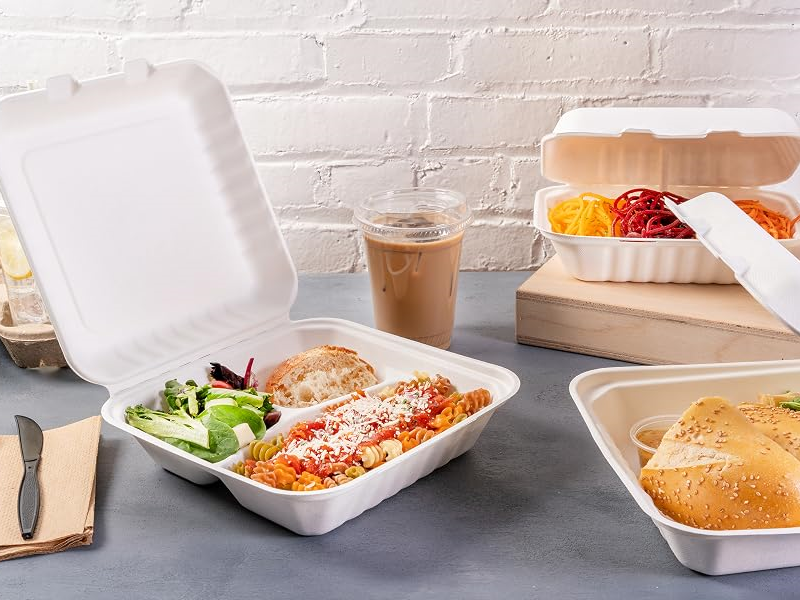
A clamshell is a one-piece hinged package - top and bottom connected at the back - that snaps shut to secure its contents. Unlike a lid-and-tray system, there is nothing to lose and nothing to mismatch. The design speeds up packing at volume, keeps food secure in transit, and allows containers to stack cleanly.
Clamshells appear across produce retail, bakery, deli counters, hot takeout, catering, and delivery. The format is consistent. What varies is the material.
5 Clamshell Materials Compared
PET - Clear Plastic for Cold Food and Retail Display
PET (polyethylene terephthalate) is the clearest rigid packaging material available. For fresh produce, pastries in a display case, or cold deli items where product visibility drives purchase, it is the standard choice. It also provides a strong moisture barrier that extends shelf life, and it is the lowest-cost option at comparable volumes.
PET softens at relatively low temperatures and cannot be used for hot food or microwave applications. On recyclability: shaped PET clamshells are sorted differently from PET bottles in most programs, and many curbside schemes exclude them. Verify locally before making recyclability claims.
See our PET hinged lid containers for cold-chain retail and food display.
PP - The Standard for Hot Takeout
Polypropylene handles hot food at serving temperatures and withstands many microwave applications without deforming - a meaningful advantage over PET. Clarity is lower, which rarely matters for hot meals. PP recycling availability varies by location; many programs accept it, others exclude it. If you operate across multiple markets, confirm PP's regulatory status in each one before standardizing on it.
Our plastic hinged lid container range includes PP formats suited to hot food packaging and takeaway.
Sugarcane Bagasse - Compostable Takeout Packaging
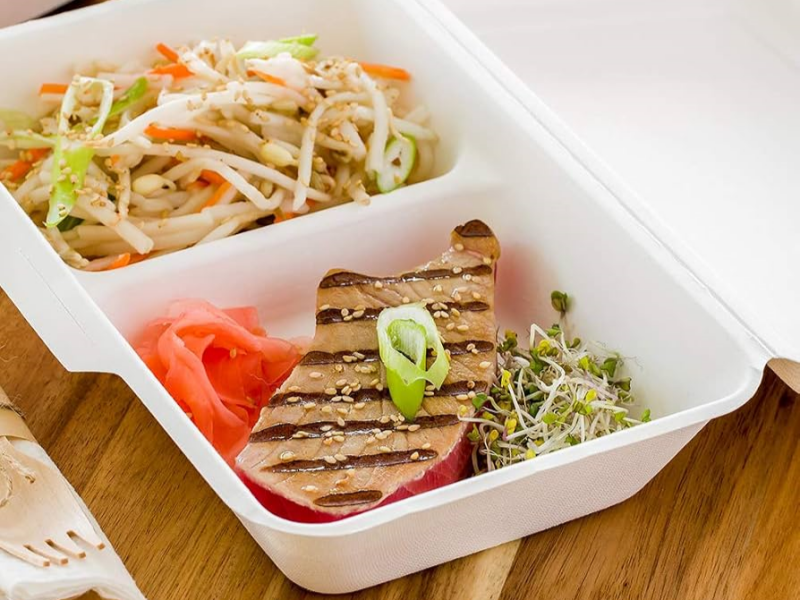
Bagasse is the fibrous byproduct left after sugarcane juice is extracted. Molded into containers, it handles hot food, resists grease, and breaks down in industrial composting facilities - typically within 90 to 180 days under controlled conditions. For a combination of environmental positioning and functional hot-food performance, it is the strongest option in the compostable category.
Before ordering, confirm three things:
- PFAS status: Some bagasse products still use fluorinated grease-resistance coatings. Request a lab report confirming total organic fluorine below 100 ppm - especially for California markets, where California AB 1200 prohibits PFAS in plant-fiber food packaging above that threshold.
- Local composting infrastructure: A compostable container that ends up in landfill produces no composting benefit. Verify that your customers or operation have access to industrial composting collection before using compostability as a marketing claim.
- Certification: BPI (North America) or TÜV Austria OK Compost (Europe) are the recognized independent marks for industrial compostability. A general "compostable" label without one of these is unverified.
Browse our compostable bagasse clamshell containers and visit our sustainability page for certification details.
Kraft Paper and Paperboard
Kraft paper suits dry foods - sandwiches, baked goods, pastries - and prints well for branded packaging. The critical variable is the grease-resistance coating. Some coatings contain PFAS; others use water-based or PLA-based alternatives. The coating type determines whether the product can actually be recycled or composted, so get written documentation from your supplier. For custom printing and branding, see our packaging customization service.
PLA and Compostable Bioplastics
PLA (polylactic acid), derived from corn starch, resembles conventional clear plastic and is increasingly available with compostability certification. For cold food display where both clarity and a compostability claim matter, it is a workable option. However, PLA cannot handle heat - it deforms in warm environments and is unsuitable for hot food - and it is incompatible with conventional plastic recycling streams. A PLA container in a PET recycling batch contaminates the load. Industrial composting is required for breakdown; without the right collection infrastructure, the environmental benefit is theoretical.
Material Comparison at a Glance
| Material | Clarity | Heat Tolerant | Relative Cost | End-of-Life |
|---|---|---|---|---|
| PET | Highest | No | Lowest | Recyclable (check locally) |
| PP | Medium | Yes | Low | Recyclable (varies by program) |
| Bagasse | Opaque | Yes | Medium–High | Industrial compostable |
| Kraft Paper | Opaque | Dry only | Medium | Recyclable / compostable (if uncoated) |
| PLA | High | No | Highest | Industrial compostable |
Which Clamshell Packaging Fits Your Operation?
Restaurants and Fast Food
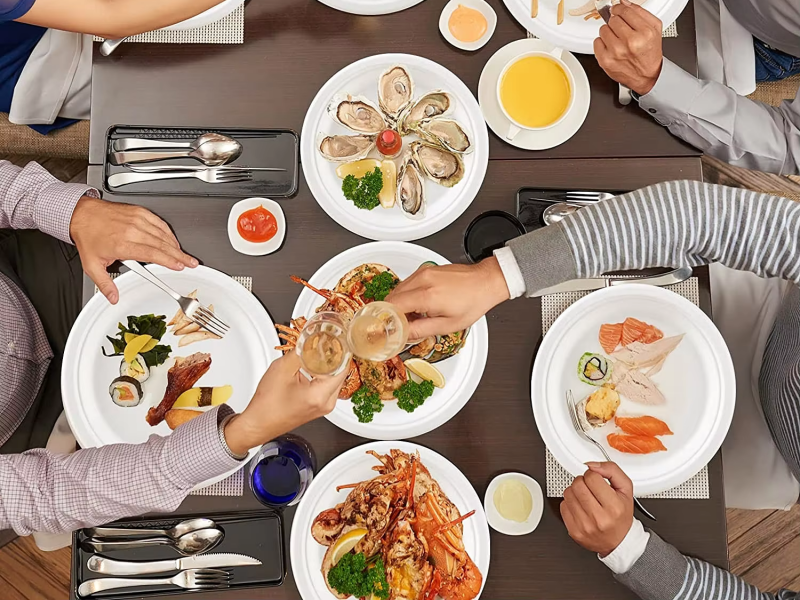
Hot, greasy food that needs to survive a delivery bag points to bagasse or PP. Bagasse offers composting credentials and handles heat and grease well - provided you confirm verified PFAS-free certification and avoid extremely liquid foods. PP is a lower-cost alternative where sustainability positioning is less important. For more on formats by food type, see our restaurant packaging and fast food packaging pages.
Salad Bars and Cold Deli
Visibility is the priority here. PET is the default: maximum clarity, strong moisture barrier, lowest cost. PLA works if compostability is required, but only in a consistently cold display environment - PLA deforms at temperatures that PET handles without issue.
Bakeries and Cafes
Kraft paperboard for dry items: reliable structure, excellent print quality, strong brand presentation. PET for cold pastry display. Test containers with your actual products if moisture is involved - performance varies significantly by supplier. Our cafe and coffee shop packaging page covers the most commonly used formats in this setting.
Delivery, Ghost Kitchens, and Fresh Produce
For delivery operations, bagasse and PP both outperform kraft paper in insulated bags - kraft loses rigidity with prolonged heat and moisture. Test with your most demanding dish before finalizing a container. For fresh produce retail, PET remains the standard: its moisture barrier and transparency extend shelf life and let customers inspect contents before purchase. See our fresh produce packaging options for more.
Understanding the Cost
The relative price hierarchy is consistent even as commodity markets shift: PET is lowest at volume, PP close behind, then standard kraft and uncertified bagasse in the mid range, certified compostable bagasse above that, and certified PLA at the top.
Volume matters significantly. Distributors typically have low minimums but higher per-unit rates. Manufacturers - particularly in China - generally require 5,000 to 10,000 pieces per SKU for standard products, with higher minimums for custom-printed orders. Committing to large volumes before testing is one of the most avoidable budget mistakes in packaging procurement.
Three costs buyers regularly underestimate:
- Certification premium: A BPI- or TÜV-certified compostable container costs more per unit than an uncertified equivalent. That premium covers independent testing - factor it into cost comparisons from the start, not after the first invoice.
- Custom tooling: Non-standard sizes require mold tooling that adds to the initial cost. Standard sizes from existing tooling are considerably cheaper to sample and order.
- Compliance risk: Sourcing a material restricted in your market is more expensive to correct than to get right at the sourcing stage.
Certifications That Matter
When a supplier claims a product is "compostable," the useful follow-up is: certified to which standard, and by whom?
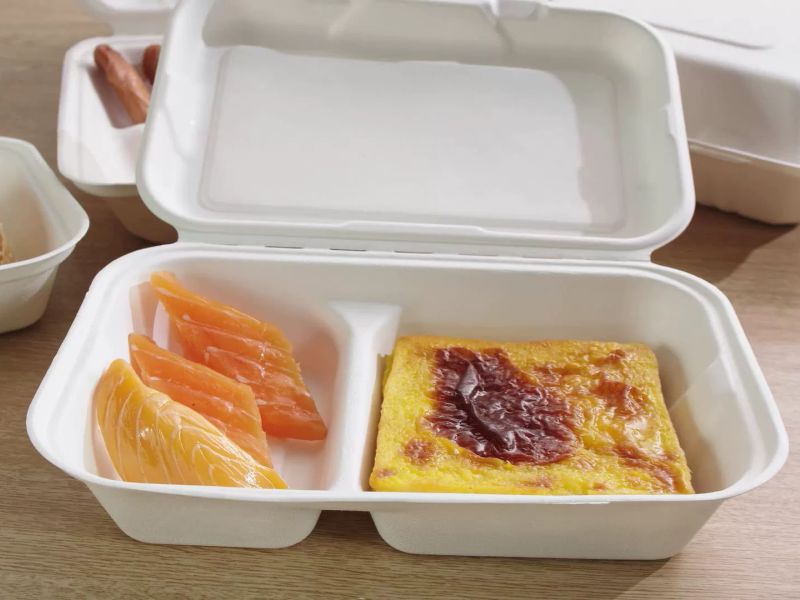
ASTM D6400 (United States) and EN 13432 (European Union) define what industrial compostability requires - covering disintegration rate, biodegradation level, and ecotoxicity limits. BPI certification means third-party verification against ASTM D6400. The Biodegradable Products Institute maintains a searchable database of certified products, useful for verifying a supplier's claim before ordering.
TÜV Austria OK Compost Industrial verifies EN 13432 compliance; OK Compost Home applies a stricter standard for residential composting conditions. For PFAS, a third-party lab report confirming total organic fluorine levels is the only verifiable form of a PFAS-free claim. Our full certification documentation is available on our certificates page.
Key Regulations in 2025
EU Single-Use Plastics Directive (SUPD): In force since 2021, it prohibits specific single-use plastic items and introduces Extended Producer Responsibility requirements across EU member states. It does not ban all plastic clamshells, but creates real compliance obligations. The EU's SUPD guidance details which items are affected.
California AB 1200: In effect from January 1, 2023, this law bans the sale of plant-fiber food packaging containing PFAS above 100 ppm total organic fluorine in California. Washington, Maine, Minnesota, and Connecticut have enacted comparable restrictions. PFAS documentation from your supplier is a compliance requirement in these states.
EPR programs: California, Washington, Colorado, and Oregon have enacted or are advancing extended producer responsibility for packaging. Non-recyclable and non-compostable materials attract higher fees, so knowing what your packaging qualifies as carries direct cost implications. See our EU and US packaging regulations guide for a full breakdown.
Three Buying Mistakes Worth Avoiding
1. Marketing compostability without infrastructure to support it. A compostable container sent to landfill produces no environmental benefit over conventional plastic. Before using compostability as a selling point, confirm that your customers or operation have actual access to industrial composting collection. In some markets, inaccurate environmental claims carry exposure under consumer protection law.
2. Ordering at volume before testing with your actual menu. A container that performs well for a dry sandwich can fail with a sauced or soupy dish. Grease migration, steam pressure, and weight each affect structural integrity differently by material. Test with your most demanding menu item before placing a large order.
3. Accepting sustainability claims without documentation. A supplier claiming their product is "BPI certified" or "PFAS-free" should provide the certificate or lab report on request. If they cannot, the claim is unverified - and that matters when making sustainability claims to customers or operating in markets with active regulatory enforcement.
FAQ
Q: What is the difference between biodegradable and compostable clamshell packaging?
A: "Biodegradable" has no standardized definition in most markets - it means a material will eventually break down, with no specifics on timeframe or conditions. "Compostable" means the packaging meets a tested standard such as ASTM D6400 or EN 13432, covering breakdown rate, required conditions, and what is left behind. Ask for the specific certification, not just the label.
Q: Can clamshell containers be used in the microwave?
A: It depends on the material. PP is generally rated for microwave reheating; most bagasse containers handle short intervals. PET and PLA are not microwave-safe. Always check the manufacturer's guidance for the specific product. For containers confirmed safe for reheating, see our microwave-safe food container range.
Q: How do I verify a supplier's PFAS-free claim?
A: Request a third-party laboratory test report confirming total organic fluorine content at or below the applicable threshold - 100 ppm under California AB 1200 for plant-fiber packaging. Reputable manufacturers provide this as standard documentation. If a supplier cannot produce it, treat the claim as unverified.
Q: What is the minimum order quantity for clamshell food packaging?
A: Distributors often have low minimums but higher per-unit rates. Manufacturers in China typically require 5,000 to 10,000 pieces per SKU for standard products, with higher minimums for custom-printed orders. Starting with a small distributor order before committing to manufacturer quantities is the lower-risk approach when evaluating a new format.
If you are comparing formats, evaluating a switch from plastic to compostable, or looking for samples before committing to volume, contact our team. We work with food businesses across restaurants, delivery, catering, and retail and can help identify the right option for your operation and budget.