


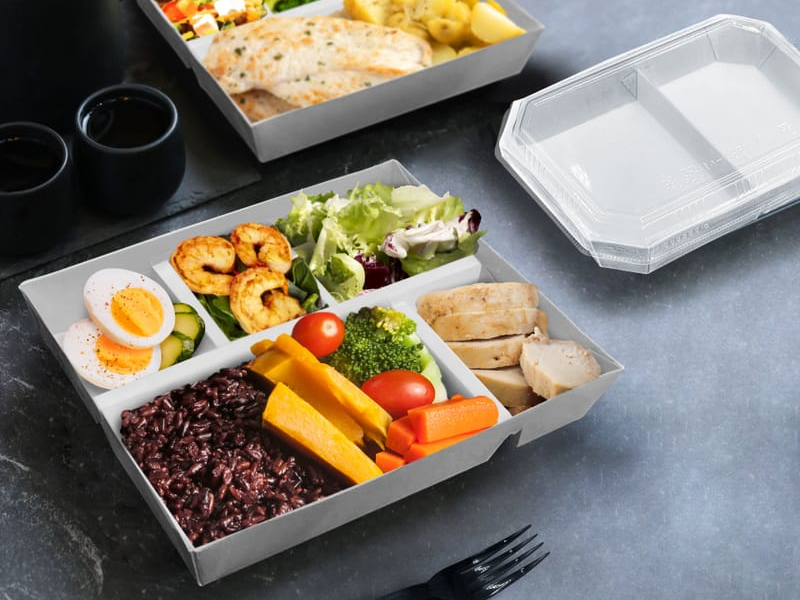
At a Glance: Which Types of Cardboard Are Microwave Safe?
| Cardboard Type | Microwave Safe? | Why |
|---|---|---|
| Plain, uncoated cardboard | Generally yes | Cellulose fibers absorb very little microwave energy |
| Food-grade certified cardboard | Yes - follow the label | Tested and cleared for food-contact heating |
| Wax-coated cardboard | No | Wax melts and can migrate into food |
| PE-lined cardboard (coffee cups, soup containers) | Short bursts only | Liner softens under heat; not designed for microwave use |
| PLA-lined (compostable) cardboard | Use caution | Standard PLA softens around 55–65°C (130–150°F) |
| Metallic or foil-printed cardboard | No | Can arc and spark inside the microwave |
| Cardboard with staples, wire handles, or foil windows | No | Metal causes arcing - even one staple is enough |
If you regularly reheat food in takeout containers and want to remove the guesswork entirely, microwave-rated to-go containers are labeled and tested from the start.
Why Some Cardboard Is Fine and Some Isn't
The Base Material
Cardboard is made primarily from cellulose fibers. Unlike water molecules or polar plastics, cellulose doesn't absorb microwave radiation efficiently - so in its plain, untreated form, the cardboard itself doesn't heat up much. Most of the energy goes into the food instead. That's why a plain takeout box feels only warm after two minutes in the microwave while the food inside is steaming.
Coatings and Liners: Where Most Problems Start
Manufacturers add coatings and liners to make cardboard grease-resistant or waterproof. In the microwave, these additions behave very differently from the base material:
- Wax coatings, common on older-style produce trays and some deli containers, melt at low temperatures and can seep directly into food. If the interior surface of a container feels slick or waxy, don't microwave it.
- Polyethylene (PE) liners are in most disposable coffee cups and many soup containers. PE can soften under sustained heat. These containers weren't designed for microwave use, even when the outer cardboard looks completely plain.
- PLA liners appear in containers marketed as compostable or eco-friendly. PLA is plant-derived, but standard grades typically soften around 55–65°C (130–150°F) - well within normal reheating temperatures. A label saying "compostable" doesn't mean microwave safe.
Under U.S. regulations, food-contact paper and paperboard are governed by 21 CFR Part 176, which sets limits on substances that can migrate from packaging into food. That standard covers food-contact safety generally; specific microwave heat resistance is a separate consideration that manufacturers must test and label independently. For a comparison of how different packaging materials hold up under heat, our microwave-safe food material guide covers the key distinctions.
Metallic Inks and Printed Elements
Most food-packaging printing inks are food-safe under storage conditions. The concern in the microwave is specifically metallic or foil-based inks - the kind that create a shiny, mirror-like silver or gold effect on premium packaging. These behave like metal inside the microwave and can cause electrical arcing. Any reflective, foil-like print is a reason to choose a different container.
Metal Fasteners You Might Overlook
Staples in bakery or deli containers, wire bail handles on Chinese takeout boxes, and foil-lined window panels on pastry packaging are easy to miss and genuinely dangerous. A single staple is enough to cause sparking. Get in the habit of checking before anything goes in.
What to Do With the Container You're Actually Holding
Pizza Boxes
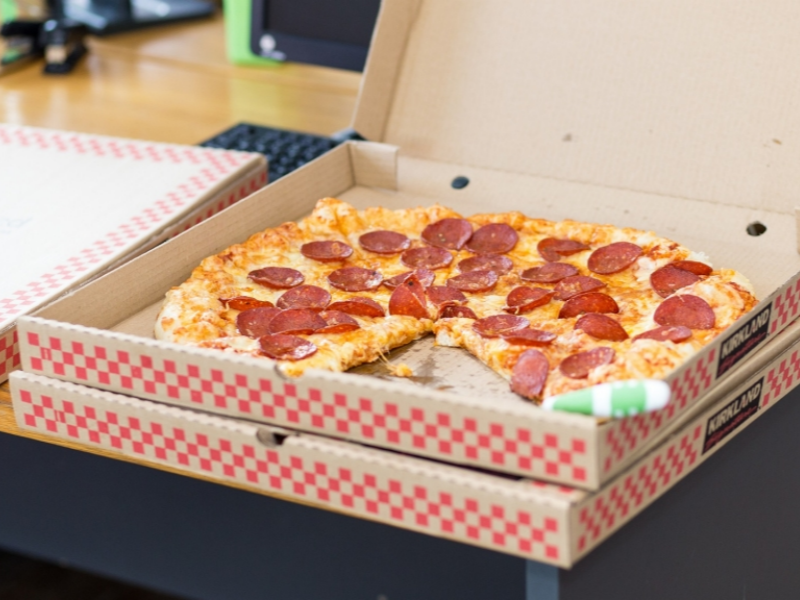
Most pizza boxes are plain corrugated cardboard with no liner and no coating. A 60–90 second reheat at medium power is generally fine. Two things to do first: remove any plastic film window, and avoid areas of the box that are heavily grease-saturated, since those spots heat unevenly and can scorch. For reheating longer than two minutes, transfer to a plate - the pizza reheats more evenly that way too.
Chinese Takeout Containers
The classic folded white paperboard box is typically plain and food-grade. The only issue is the metal wire bail handle, which has to come off completely before the container goes anywhere near the microwave - not bent to the side, but removed. After that, 1–2 minutes of reheating is generally safe. If you're sourcing containers for food service use, plastic takeout containers designed for Chinese food are worth comparing for heat performance and reliability.
Soup and Liquid Containers
Most deli soup containers have a PE or wax lining to prevent leaking. For a quick reheat under 90 seconds, the risk is low. Beyond that - or when the container is full of liquid - transfer to a bowl. A softening container of hot soup is also a structural risk; you don't want it giving way mid-lift. For guidance on keeping soups intact during transport and service, this overview of soup transport containers covers the practical options.
Paper Coffee Cups
Standard disposable paper cups are PE-lined and not designed for microwave use. Under heat the liner softens and the cup can deform, creating a spill risk with hot liquid. Use a ceramic mug - this applies to both single-wall and insulated double-wall varieties. The extra insulation layer doesn't change the PE liner situation.
How to Check Before You Heat (3 Steps)
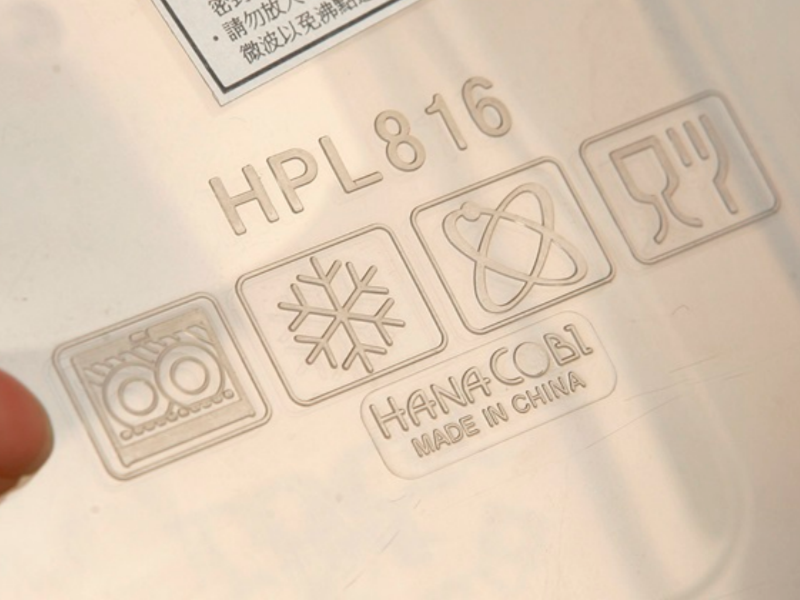
- Look for a label or symbol. Check the bottom and sides of the container for the words "Microwave Safe" or a symbol of a microwave oven - typically a rectangle with two or three wavy horizontal lines inside. If it's labeled, follow the time and power guidelines on the packaging.
- Inspect for coatings and metal. Run a finger along the interior surface. Slick or waxy means a coating is present. Look for any shiny foil-like print, staples, clips, or metallic window panels. Remove metal components where possible, or switch containers entirely.
- Apply the default rule when it's still unclear. Plain cardboard with no visible coating and no metal: keep the first session under 60 seconds and stay nearby. When genuinely unsure, transfer the food to a plate. It takes 20 seconds and eliminates every question on this list.
For a detailed walkthrough of evaluating takeout packaging before heating, see how to know if your takeout container is microwave safe.
How Long Is Safe?
| Duration | Risk Level | Notes |
|---|---|---|
| Under 60 seconds | Low | Fine for plain, uncoated food-grade cardboard |
| 1–2 minutes | Acceptable | Safer with food inside; food absorbs most of the energy |
| Over 2 minutes | Increasing risk | Drying, warping, and scorching become more likely |
Something worth knowing: cardboard with food inside is safer than an empty container. The food absorbs the bulk of the microwave energy, which keeps the packaging from overheating. An empty cardboard box heats much faster and is significantly more likely to scorch. If you're reheating the last scraps of something and the container is mostly empty, move the food to a smaller dish first.
Cardboard starts to dry out and discolor noticeably above around 120°C (250°F). Its actual autoignition temperature - the point at which it can catch fire - is approximately 233°C (451°F). That number is, in fact, the real-world basis for the title of Fahrenheit 451. Standard microwave reheating of food rarely brings packaging close to that threshold, but empty containers and localized dry spots are the exceptions to keep in mind.
If Something Goes Wrong
Sparks or Arcing
Stop the microwave immediately. Arcing almost always means metal is present - a staple, foil element, or metallic ink. Let the container cool before touching it, and inspect the microwave interior for residue or damage before your next use.
Smoke or a Burning Smell
Turn off the microwave, open the door carefully, and let the smoke clear before reaching inside. Discard the container. If the smell came from a coating or liner melting rather than the cardboard scorching, discard the food as well.
Fire Inside the Microwave
Turn off the power and keep the door closed. Limiting the oxygen supply is what extinguishes the fire - opening the door does the opposite. Do not use water. If the fire hasn't stopped within about 30 seconds of the door being shut, leave the area and call your local emergency number. Don't attempt to handle a sustained appliance fire yourself.
Already Microwaved It - Is the Food Safe to Eat?
It depends on what was in the container. If it was plain, uncoated food-grade cardboard with no metal, no visible damage, and nothing smelled burnt or off, the risk is very low. If the container had a visible wax or PE lining, or if you noticed sparking, smoke, or an unusual smell, discard the food. The risk from a single incident is generally considered minimal, but questionable leftovers aren't worth keeping. For broader context on reheating food safely in different types of packaging, can you reheat food in a plastic container covers similar considerations for plastic packaging.
FAQ
Q: What does the microwave-safe symbol actually look like on cardboard?
A: It's typically a rectangle representing a microwave oven with two or three wavy horizontal lines inside - sometimes with a small dish beneath the waves. You'll usually find it on the bottom or side panel. The words "Microwave Safe" or "Microwaveable" in plain text are equally valid; the symbol isn't mandatory, and its absence doesn't automatically mean a container is unsafe.
Q: Are compostable cardboard containers safe to microwave?
A: Not automatically. "Compostable" describes how a material breaks down at end of life - it says nothing about heat resistance during use. Plain molded-pulp containers with an explicit microwave-safe label are generally fine. Containers with PLA liners are a different matter, since PLA softens at temperatures easily reached during normal reheating. Always check for a microwave-safe label specifically, regardless of what else the packaging says. For more on what biodegradable food containers are typically rated for, the liner material is the key variable.
Q: Can you microwave plastic takeout containers?
A: Some yes, some no - the resin type is what matters. PP (polypropylene) is generally considered microwave safe. PS (polystyrene, often marked with a #6) and PVC are not. This guide on microwaving plastic takeout containers breaks it down by material type so you're not guessing at the recycling number on the bottom.
Q: How long can cardboard actually be in the microwave before something bad happens?
A: For plain food-grade cardboard with food inside, 1–2 minutes is well within normal range. The autoignition point for paper-based materials is around 233°C (451°F) - standard microwave reheating of food rarely gets packaging close to that. The real risk isn't duration per se; it's empty containers or dry spots heating up without food to absorb the energy. Keep food in the container and keep sessions under two minutes, and you're working well within safe parameters.
Q: Is it safe to microwave frozen food in its original cardboard box?
A: Only if the packaging explicitly says microwave-safe. Frozen meal packaging varies widely - some trays are oven-rated, some are microwave-rated, and some are neither. A box that looks plain on the outside may have internal coatings not visible to the eye. When there's no clear microwave label, transfer the food to a microwave-safe dish before heating.
Q: What's the most reliable container material for reheating food?
A: Ceramic and glass are the gold standard - no label-checking required. Among disposables, PP plastic labeled microwave-safe is the most consistently reliable option. If you're choosing containers for regular reheating use and want to understand the differences between materials before buying, this comparison of PP, PS, and PET plastic is a useful starting point.
The Bottom Line
Cardboard itself is not the problem. Plain, uncoated, food-grade cardboard has been used for brief microwave reheating without significant incident for a long time. The risk comes from what's been added to the cardboard - coatings, liners, metallic inks, and metal fasteners.
A quick check before you press start covers most real-world situations: look for the microwave-safe label, feel the inside of the container, remove any metal. When the answer still isn't clear, a ceramic or glass dish solves the problem in 20 seconds.
If you'd rather start with containers designed for reheating from the ground up, microwave-safe food containers take the uncertainty out of the equation - and how to select plastic containers for hot food is a good next read if you're evaluating options for food service use.