


This guide breaks down each common type of paper container, explains what makes it safe or unsafe for microwave use, and gives you a practical way to assess an unlabeled container before you heat anything in it.
Why the coating matters more than the paper
Paper fiber handles microwave energy reasonably well on its own. Uncoated cellulose doesn't absorb microwaves strongly and doesn't release compounds at kitchen temperatures. The complication is that virtually every paper food container designed to hold food - especially anything used for takeout or delivery - is treated on the interior surface.
Those treatments are necessary. They prevent oil from soaking through, stop liquid from collapsing the container walls, and help the packaging hold its structure during transport. Some of these treatments, like polypropylene (PP) coatings, handle microwave heat without issue. Others - polyethylene (PE) laminate, wax, and PLA bioplastic - don't. The "microwave safe" label certifies that the container's specific combination of materials has been tested under standardized conditions. Without it, you're making an assumption about something invisible from the outside.
Paper containers by type - what's safe and what isn't
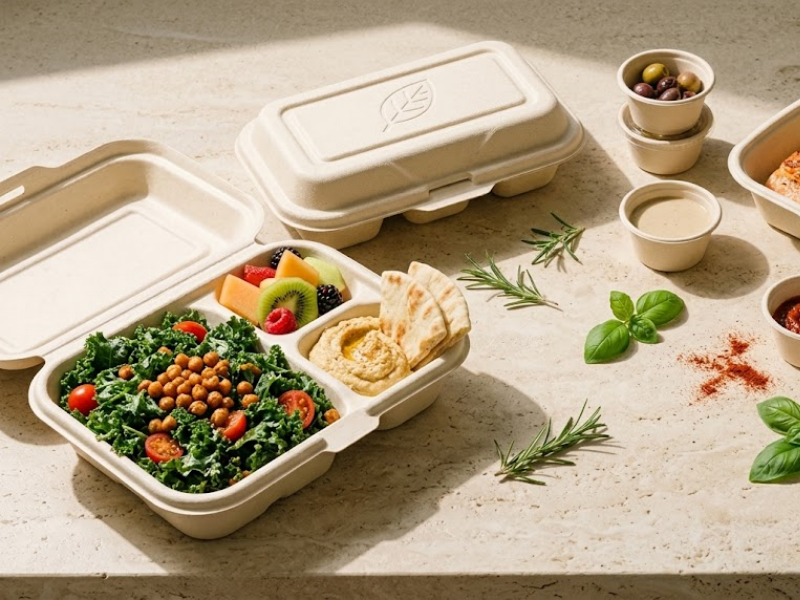
Molded fiber and uncoated pulp containers
Containers made from plant fiber - sugarcane bagasse, bamboo pulp, wheat straw, or recycled paper pulp - are the most microwave-friendly category of paper packaging. They achieve grease resistance through fiber density rather than through a synthetic coating, which means there's no plastic laminate to soften or migrate under heat. Microwave energy passes through the fiber and does its job on the food inside.
Practical limits still apply. These containers absorb moisture over extended heating sessions and will soften eventually. Very fatty or dry foods can cause the edges to dry out or scorch beyond two to three minutes. Within that window at standard household wattage, a molded fiber container carrying a microwave-safe label handles the heat reliably. If you're sourcing packaging for a restaurant or café and want options that are both microwave-compatible and environmentally sound, bagasse and molded fiber food containers are worth evaluating for that reason.
Paper cups - a commonly misunderstood case
Paper cups behave differently from bowls and takeout boxes, and this trips up a lot of people. Most hot-drink cups - including standard coffee and tea cups from cafes and fast food counters - are lined with polyethylene (PE) to prevent liquid from soaking through the paper wall. That lining is not designed for microwave heat. Reheating coffee or soup in a PE-lined paper cup subjects the interior laminate to conditions it wasn't built for, and with fatty foods in particular, the risk of coating migration increases.
Some cups manufactured with PP linings or other heat-stable coatings carry explicit microwave-safe ratings - you'll find this in certain single wall paper cups and double wall insulated cups designed for foodservice. Without that label, transfer your drink to a ceramic mug before reheating. What goes into a paper cup's coating layer varies widely across manufacturers - this breakdown of paper cup coating types explains what PE, PP, and PLA linings mean in practice.
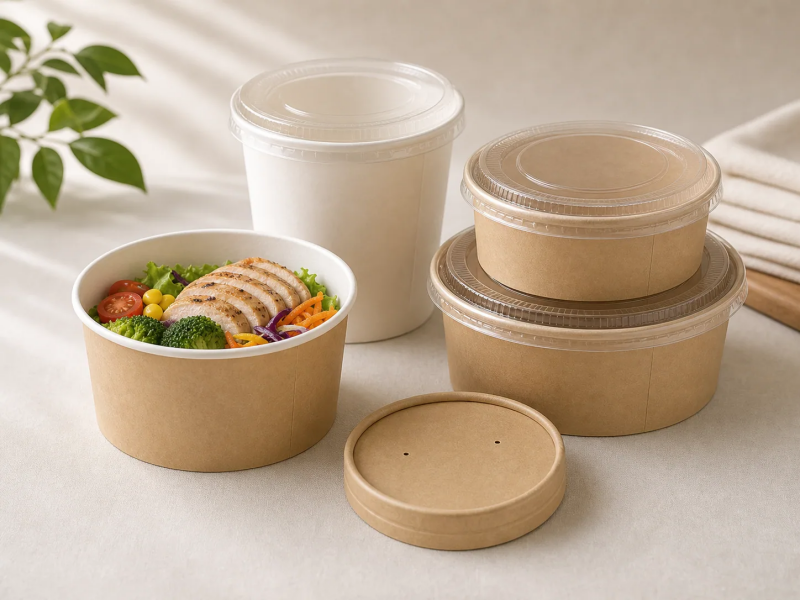
Kraft paper containers
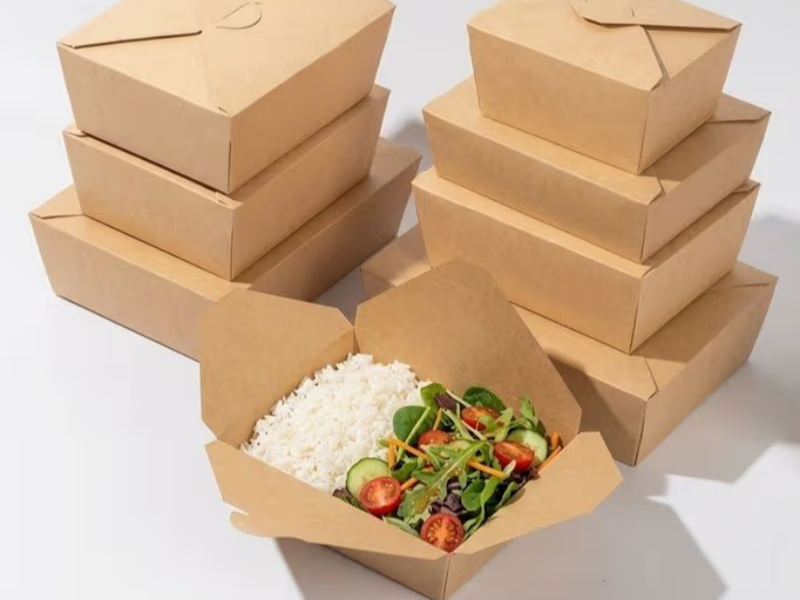
Kraft paper is sturdy and relatively heat-tolerant on the outside. The interior is a different story. Most kraft takeout boxes, rice bowls, and to-go soup containers are lined with PE to prevent leaks and grease penetration. PE has a melting point of roughly 120–130°C (248–266°F), which sounds like a comfortable margin - until you're microwaving fried chicken, cheese sauce, or oily stir-fry, where localized food surface temperatures can exceed that range and cause the lining to soften.
Some kraft containers use PP interior coatings instead, which tolerate microwave heat considerably better. A PP-coated kraft container with a microwave-safe label is a meaningfully different product from an unlabeled PE-lined box, even if they look identical from the outside. The label is what distinguishes them. Without one, run the finger test described below. For businesses evaluating which plastic grades perform well under microwave conditions, this comparison of PP, PS, and PET for microwave use covers the material differences in more detail.
PLA-lined containers - eco-friendly is not the same as microwave safe
This distinction matters because the marketing around compostable packaging creates genuine confusion, and getting it wrong means putting a container in the microwave that was never designed for it.
PLA - polylactic acid - is a plant-based bioplastic derived from corn starch or sugarcane. It's used as an interior lining for a wide range of compostable cups, bowls, and deli containers marketed as eco-friendly. That framing is accurate. What's equally accurate is that PLA starts deforming at around 55°C (131°F). A standard microwave will push most food well past that temperature. In a PLA-lined container, the result is a warped vessel that may leak and expose food to degradation compounds from the coating.
Compostable certification - whether from BPI, TÜV Austria, or DIN CERTCO - verifies that a container will break down under industrial composting conditions. It has no bearing on heat resistance or microwave performance. A container can hold every compostable certification available and still be completely wrong for the microwave. Treat any container with a compostable-only label the same as an unlabeled container: transfer the food before heating. For eco-conscious operations that need packaging which is both compostable and genuinely microwave-compatible, bagasse clamshell containers are a commonly used alternative because their grease resistance comes from fiber structure rather than a plastic lining.
Paperboard cartons
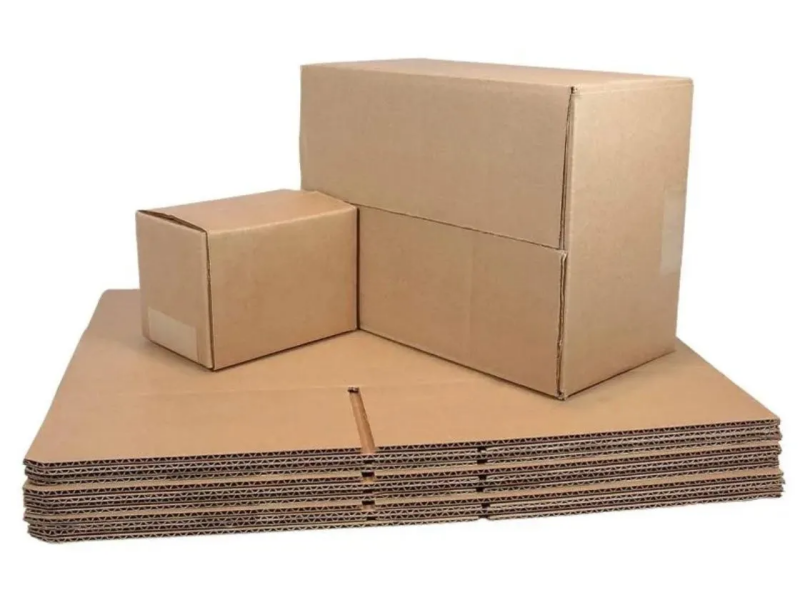
Paperboard cartons - cereal-style boxes, fast food containers, juice-style packaging - are almost universally coated with PE, wax, or both on the interior. Wax melts at relatively low temperatures. PE faces the heating risks already described. Many carton designs also use adhesives at the seams that aren't tested for heat exposure. The USDA Food Safety guidelines on microwave cooking specifically recommend against heating food in these containers unless they carry an explicit microwave-safe designation. Transfer the food to a glass or ceramic dish.
Plain cardboard takeout boxes
The classic folded cardboard takeout box is a mixed case. Plain, uncoated, unprinted cardboard handles short microwave sessions reasonably well. The problems come from what's usually been added: metal wire closures, PE or wax interior coatings, exterior graphics printed with inks that may not be heat-tested, and adhesives at the seams.
The USDA specifically calls out Chinese-style takeout containers with metal handles as something that should never go in the microwave - metal components cause sparking regardless of what the rest of the container is made from. For a plain cardboard box without any metal parts, under 90 seconds with close monitoring is the most reasonable approach. Removing the food to a ceramic dish beforehand is cleaner and removes the uncertainty entirely.
How to check an unlabeled container
Start by looking for a label. A container tested and cleared for microwave use should carry the text "Microwave Safe," a microwave icon with internal wavy lines, or three horizontal wavy lines stacked vertically - the most widely used microwave-safe symbol in North America. If you find any of these, follow the time and wattage guidance on the container.
When there's no label, three quick checks help narrow things down. None of them replace a certified label, but they can identify obvious risks.
The finger test. Run your fingernail lightly across the interior surface. A smooth, slightly plastic-feeling surface - similar to the inside of a milk carton - usually indicates PE laminate. Skip the microwave. A rough, matte, fibrous texture that feels more like paper than plastic is more consistent with uncoated fiber or a PP-type coating, which is safer - though still not a guarantee without a label.
Visual inspection. A shiny, film-like interior is characteristic of PE or wax. A matte, paper-like surface is a better sign. Then check for metal: staples, wire closures, metallic design elements, or metal handles. Any metal in the container means it should not be microwaved, regardless of what the paper is made from.
The water test. Add a small amount of water to the container and microwave for 30 seconds on high. If the container itself - not the water - feels significantly hot when you remove it, that's a sign it's absorbing microwave energy rather than letting it pass through to the food. This test is a rough filter, not a safety certification, but it catches the most problematic failures. For more on reading microwave compatibility signals across different packaging types, this guide to identifying microwave-safe takeout containers goes through what to look for in more detail.
PFAS in paper packaging: what heat changes about the risk
There's a separate consideration worth understanding if you reheat food in paper containers regularly.
PFAS - per- and polyfluoroalkyl substances - are a group of synthetic chemicals applied to many types of paper food packaging to create grease and moisture resistance. They work effectively for that purpose. The concern is their persistence: PFAS compounds don't break down easily in the environment or in the body, and some members of this class have been linked to health effects with long-term exposure at sufficient concentrations.
Under ordinary food-contact conditions - carrying a salad in a PFAS-treated bowl or wrapping a sandwich - exposure from the packaging is generally considered low. Under heat, migration rates increase. The hotter and longer the exposure, the greater the transfer from the paper surface into food. For someone who occasionally heats takeout in an untested container, the risk from any single instance is minimal. For someone who regularly microwaves food in unlabeled paper packaging, the cumulative exposure picture is different.
The FDA has worked with food packaging manufacturers on voluntary phase-outs of certain PFAS compounds in food contact materials, with major transitions concentrated in the early 2020s as the food packaging industry shifted away from long-chain PFAS formulations. Containers labeled as "PFAS-free" have been independently verified against these compounds. Uncoated molded fiber containers typically don't use PFAS - their grease resistance is structural, not chemical - which is one practical reason they're often recommended for microwave use. For a broader look at which packaging materials carry the lowest risk for repeated reheating, this microwave-safe food material guide covers the main options in use today.
Quick reference: microwave safety by container type
| Container type | Microwave safe? | Suggested max time | Key concern |
|---|---|---|---|
| Uncoated molded fiber (bagasse, bamboo pulp) | Yes, when labeled | 2–3 minutes | Can scorch or soften with extended heat or dry food |
| Kraft paper with PP coating (labeled) | Yes, when labeled | 1–2 minutes | Confirm lining type before use |
| Kraft paper with PE lining | No | - | PE softens under high-fat food temperatures |
| Paper cups (most types) | No, unless labeled | - | PE lining standard in most cup designs |
| PLA-lined compostable containers | No | - | Deforms above 55°C / 131°F |
| Paperboard cartons (cereal boxes, fast food) | No | - | Wax and PE coatings throughout |
| Plain cardboard, no metal or coating | Marginal | Under 90 seconds | Unknown inks and adhesives; monitor closely |
| Any container with metal parts | Never | - | Sparking and fire risk |
If you do microwave in a paper container
Steam pressure builds quickly inside any sealed container. Leaving a lid slightly open - or draping a vented microwave cover over the top - prevents a sudden burst of steam when you go to remove the food. This matters most with soups and saucy dishes, but it's a useful default regardless of what you're reheating.
High-fat foods reach higher temperatures than water-based dishes, which is exactly why the PE melting concern applies most to fried foods, cheese, and oily meat dishes rather than to soup or rice. If you're unsure about a container and the food inside is fatty, a glass or ceramic dish is the safer choice even when the paper container appears to be microwave safe.
Two shorter heating intervals with a stir in between distribute heat more evenly than one long continuous run. This is better for the food and easier on the container - sustained heat over several minutes stresses the material more than two one-minute bursts with a break. It also gives you a chance to check the container halfway through. If anything looks warped, feels soft in a way it didn't before, or smells off, stop and transfer the food.
One practical point that gets overlooked: don't microwave an empty paper container. Without food absorbing the energy, the container takes it all. Even labeled microwave-safe containers can scorch when heated dry.
What to do if you already microwaved the wrong container
If you realize after the fact that you heated food in a PE-lined, wax-coated, or PLA-lined container, here's a useful way to think through it. A single, short microwave session in a questionable paper container is unlikely to cause acute harm. The risks tied to coating migration are generally associated with repeated exposure over time, not a one-off event.
The most meaningful signal is what happened to the container during heating. If it warped noticeably, lost its shape, developed soft spots, or produced an unusual chemical smell, those are signs the coating reached conditions where migration was more likely. In that case, it's reasonable to discard the food. If the container came out looking exactly as it went in - no deformation, no smell, no visible change - the exposure was likely minimal and the food is probably fine.
For anyone who regularly reheats takeout or meal-prep food, the practical adjustment is to have labeled microwave-safe containers on hand for that purpose. PP-based microwavable containers are purpose-built for repeated heating cycles and eliminate the material uncertainty that makes paper containers tricky in this context.
Three things people regularly get wrong
"Paper is natural, so it must be safe." The paper fiber usually is. The coatings, adhesives, and inks applied to that paper to make it functional as food packaging are a different matter. Microwaving a paper container means microwaving all of those added materials, not just the cellulose - and their heat performance varies significantly by type.
"It says compostable, so it should be fine." PLA-lined compostable containers are the clearest illustration of why sustainability credentials and microwave performance are unrelated. PLA deforms at temperatures well below what a microwave routinely produces. Compostable certification tests for industrial composting conditions, not heat resistance. The two labels are testing for entirely different properties, and a container can qualify for one while being entirely unsuitable for the other.
"The restaurant put hot food in it, so reheating must be equivalent." Takeout packaging is engineered to hold food at serving temperature for the duration of delivery or a meal. Microwaving applies energy differently than pouring hot food in - localized temperatures near fatty food in a microwave can exceed what the same container handled without incident when filled with soup at 80°C. The container's original use doesn't tell you how it will behave in the microwave.
FAQ
Q: Can you microwave paper bowls?
A: Plain, uncoated paper pulp bowls - the kind commonly used for salads, grain bowls, and soups at cafes - are generally safe for one to two minutes. Paper bowls with a shiny interior film are likely PE-lined and should not be microwaved. Always check for a microwave-safe label before heating.
Q: Can you microwave paper takeout boxes?
A: Only if they carry an explicit microwave-safe label. Most standard kraft boxes are PE-lined, and cardboard folding containers often contain metal closures or untested adhesives. For reliable performance across repeated heating cycles, purpose-built microwave-safe to-go containers are designed and tested specifically for that application.
Q: How long can you microwave a paper container?
A: For confirmed microwave-safe containers, one to three minutes at 700–1,000 watts is the general guideline. Shorter intervals with a check in between are better than one extended run - sustained heat over several minutes places more stress on the material than two shorter sessions.
Q: Are all paper cups safe to microwave?
A: No. Most paper cups are lined with PE and are not suitable for microwave reheating. Some cups with PP linings carry microwave-safe labels - these exist but are not the default. Without a label, transfer to a ceramic mug before heating.
Q: What should I look for in a microwave-safe paper container?
A: An explicit "Microwave Safe" label or the three-stacked-wavy-lines symbol is the most reliable indicator. Beyond labeling, containers made from uncoated molded fiber or carrying a PP-lining designation are the most consistently reliable. Avoid any container with a shiny interior film, visible metal parts, or a compostable-only certification with no microwave rating.
Q: Are plastic containers a safer option for microwave reheating?
A: PP plastic containers rated for microwave use offer a more predictable option because they're manufactured and tested specifically for repeated heating cycles. If you're evaluating alternatives to paper for regular microwave use, this guide to microwaving food in plastic containers covers the key material distinctions, and PP plastic's safety profile for food storage and heating goes into the specific properties that make it suitable for that use.
The takeaway
Whether a paper container is safe to microwave comes down to its interior coating - not the paper, not the branding, and not what it was used for originally. A microwave-safe label means the container has been tested for that use. No label means you're making assumptions about invisible materials that behave very differently under heat.
When there's any uncertainty, transferring food to glass or ceramic is the simplest resolution. It takes ten seconds and removes all the guesswork.
For restaurants and foodservice operations that rely on microwave reheating as part of their service, the container decision made at the sourcing stage matters. Choosing packaging explicitly rated for microwave use removes the ambiguity for customers and avoids a category of liability that isn't worth carrying. If you're looking for guidance on which options fit your specific application, the team at Yangrui Pak is available to help.