


bagasse-vs-plastic-food-containers-guide
Food packaging plays a crucial role in preserving food quality, ensuring convenience, and enhancing the customer experience. Among the many packaging options available today, bagasse food containers and plastic food containers have become two of the most widely used solutions for takeaway, delivery, and food service applications. While both materials offer practical advantages, they differ in many aspects. Understanding these differences can help businesses make informed decisions and choose packaging solutions that best suit their products, operational requirements, and long-term goals.
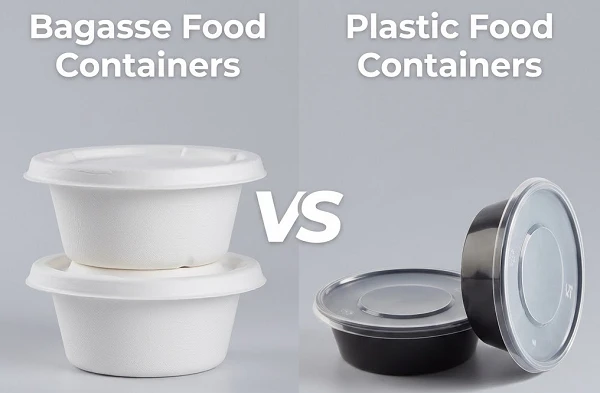
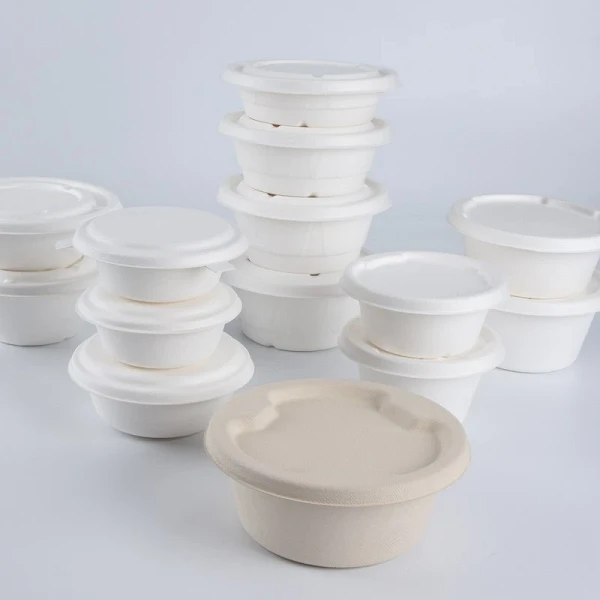
What Are Bagasse Food Containers?
Bagasse food containers are disposable food packaging products made from sugarcane bagasse, a natural by-product left after extracting juice from sugarcane. As a renewable plant fiber material, bagasse is widely used to manufacture clamshell boxes, trays, bowls, and compartment containers for takeaway and food service applications. These containers are known for their biodegradability, compostability, and resistance to heat, oil, and moisture, making them a popular choice for businesses seeking more sustainable packaging solutions.
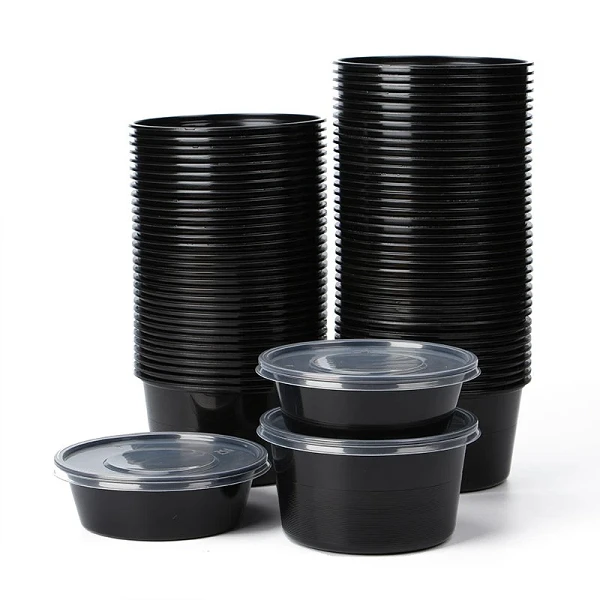
What Are Plastic Food Containers?
Plastic food containers are food-grade packaging products commonly made from materials such as polypropylene (PP) and polyethylene terephthalate (PET). They are widely used in restaurants, meal preparation, food delivery, and retail packaging because of their durability, lightweight design, and versatility. Depending on the material, plastic food containers can offer excellent transparency, moisture resistance, stackability, and microwave compatibility, making them suitable for a wide range of hot and cold food applications.
Bagasse Food Containers vs Plastic Food Containers: Key Differences
The table below compares bagasse and plastic food containers across key factors to
help you understand their relative strengths and limitations.
|
Feature |
Bagasse Food Containers |
Plastic Food Containers |
|
Material Source |
Sugarcane fiber |
PP, PET, and other plastics |
|
Environmental Impact |
Biodegradable and compostable |
Recyclable depending on material and local facilities |
|
Heat Resistance |
Excellent |
Varies by material type |
|
Microwave Compatibility |
Suitable for reheating |
PP containers are microwave-safe |
|
Oil and Moisture Resistance |
Good |
Excellent |
|
Transparency |
Opaque natural appearance |
Clear or colored options available |
|
Durability |
Strong fiber structure |
High impact resistance |
|
End-of-Life Disposal |
Composting |
Recycling or landfill |
|
Cost |
Generally higher |
Cost-effective for large-volume applications |
|
Typical Applications |
Sustainable takeaway packaging |
Food storage, delivery, and retail display |
Factors to Consider When Choosing Between Bagasse and Plastic Food Containers
Before deciding on takeaway food containers, businesses should evaluate several factors that can affect packaging performance, operational efficiency, and sustainability goals.
- Food Type and Serving Conditions – Hot meals, cold foods, oily dishes, and frozen products may require different levels of heat resistance, moisture resistance, and structural strength.
- Environmental Impact and Disposal Options – Composting availability, recycling systems, and sustainability initiatives can influence which material is more suitable for specific markets.
- Cost and Budget Requirements – Material costs, transportation efficiency, and overall packaging expenses should be balanced with performance expectations.
- Product Presentation and Customer Preferences – Some applications prioritize transparency and product visibility, while others focus on natural appearance and environmentally friendly packaging.
- Business Goals and Brand Positioning – Packaging choices should support operational requirements and align with the brand's image and long-term development strategy.
How to Choose Between Bagasse and Plastic Food Containers
Once you have evaluated the key factors above, the decision comes down to which material better aligns with your specific operations. Below is a practical breakdown to guide your final choice.
Choose Bagasse Food Containers If:
- Your foods are dry or low-moisture, or you are willing to use liners for wetter items.
- Your region has industrial composting facilities to process the containers properly.
- Your brand emphasizes sustainability, and your customers value eco-friendly packaging.
- Your budget allows for a moderate cost increase (typically 10-15% higher than plastic).
- You are preparing for potential regulations restricting single-use plastics.
Choose Plastic Food Containers If:
- Your foods are oily, saucy, or liquid-heavy, requiring strong grease and moisture resistance.
- You need extended shelf life or long-distance transportation protection.
- Your priority is cost efficiency, especially for high-volume operations.
- You require extensive custom plastic food containers-logos, specific shapes, colors, or compartment designs.
- Your operations involve frequent refrigeration, freezing, or microwave reheating.
- Your region lacks composting infrastructure or has well-established recycling systems.
Conclusion
Bagasse and plastic food containers each offer distinct advantages, and neither is inherently superior to the other. Disposable food containers provide a renewable, compostable solution that appeals to eco-conscious brands and markets with supporting infrastructure. Plastic containers deliver superior durability, moisture resistance, and cost efficiency, making them the practical choice for high-volume operations and extended storage needs. The right choice ultimately depends on your specific business priorities-including food types, sustainability goals, budget, and regulatory environment. By carefully evaluating these factors against your operational context, you can select packaging that best supports your products, your customers, and your long-term growth.
YANGRUI: Your Reliable Food Packaging Partner
YANGRUI offers a comprehensive range of food packaging solutions, including both bagasse food containers and plastic food containers, to meet the diverse needs of restaurants, takeaway services, catering businesses, and food distributors. With extensive manufacturing experience, flexible customization capabilities, and a wide selection of sizes and designs, YANGRUI helps customers find packaging solutions that balance functionality, presentation, and sustainability. Whether you need compostable sugarcane containers, microwave-safe PP containers, or clear PET packaging, YANGRUI is committed to providing reliable quality and consistent supply to support your business growth. Contact us today to explore customized food packaging solutions tailored to your specific requirements.